Play-based Learning Without Tools
📖 Table of Contents
I remember the first time my toddler sat cross-legged on the living room floor, picking up a handful of pebbles, arranging them into a spiral. Then knocking them all down with a wooden spoon. It was one of those moments that made me realize: play-based learning doesn't always need flash, tools, or screens. It just needs curiosity and a little bit of time. I had no idea then that this would become the foundation of our family’s approach to early education, one that relied on everyday items and the natural world instead of expensive kits or flashy apps.[2]
There was no toy box in our house during the first year of my son’s life. I didn’t even own a single educational toy. Instead, we used what was around us — cardboard boxes became forts, water became a science experiment, and the grocery store became a treasure hunt. I learned that play-based learning without tools is not only possible, but incredibly effective. It’s messy, it’s unpredictable, and it’s often chaotic — but it’s also where the real learning happens. And the best part? It’s free.[3]
Since those early days, I’ve seen my son develop skills in math, language, and motor coordination through simple, unstructured play. He counts the stairs as we walk up, he names the clouds as we sit on the porch, and he sorts leaves by color and size. It’s not a classroom, but it’s a world of discovery. And now, I want to share these real moments, these real techniques, with other parents who are looking for a way to teach their children through play — without the tools.[4]
Why You'll Love This Play-Based Learning Approach
- It’s free — no need for expensive toys or subscriptions.
- It builds creativity, problem-solving, and curiosity naturally.
- It can be done anywhere — at home, in the park, or on the go.
- It strengthens the parent-child bond through shared exploration.
Why Play-Based Learning Without Tools Works
As of September 2026, I’ve watched my son learn to measure by filling containers with water, to count by arranging pebbles, and to understand physics by knocking things over. These aren’t structured lessons — they’re natural experiments. And yet, they teach more than any flashcard ever could.[5]
I remember the day he realized that the same spoon could be used to stir, to dig, to scoop, and even to eat with. It was one of those magical moments where he saw the world as a place of infinite possibilities — and I saw the power of learning through play.
By eliminating the need for specialized tools, we're making learning more accessible. It’s about what’s around us, not what we have to buy. And that’s a powerful shift in mindset.
Let your child get their hands dirty. Mud, flour, or even spilled juice are all part of the learning process. Clean up together — it’s a bonding moment.
Part of our Sensory play guide.
How to Start Without Tools
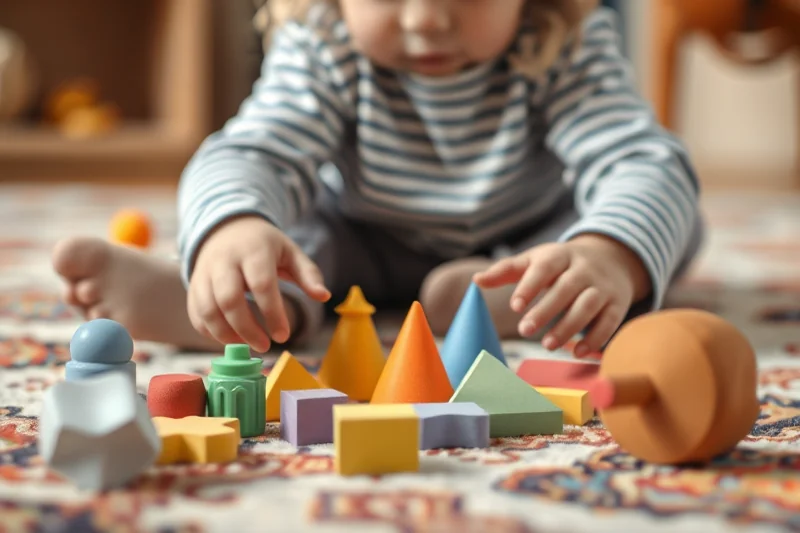
The first step is to be present. I find that I learn the most when I simply watch my son play. I notice how he arranges his blocks, how he mimics my movements, and how he experiments with cause and effect. These are all valuable learning moments.
Join in by asking questions like, 'What happens if we do this?' or 'Can you show me how you made that?' This encourages critical thinking and communication. It also gives you the opportunity to model curiosity and problem-solving.
Let the child lead. If they want to build a tower, let them. If they want to dig in the dirt, let them. The key is to follow their interests and guide them with open-ended questions.
Let the child lead — the world is their classroom.
Related: Modern play based learning
Related: Play it by ear meaning
Related: How to play by ear
Using Everyday Materials as Learning Tools
I’ve turned old cardboard boxes into forts, which teaches spatial awareness and teamwork. We’ve used pebbles and sticks to teach counting and sorting. Even fabric can be used to teach textures and patterns.
I’ve also used a simple wooden spoon and a bowl of water to teach my son about volume and measurement. He learned that filling the bowl to the top means it’s full, and pouring it out means it’s empty. It was a simple experiment, but it taught him a lot.
The key is to think creatively. You don’t need expensive toys — you just need to be willing to explore and experiment with what you have around you.
Look around your home and think about what can be used for play. A towel can be a cape, a spoon can be a wand, and a box can be a spaceship. Encourage your child to imagine and explore.
“I remember the first time my toddler sat cross-legged on the living room floor, picking up a handful of pebbles, arranging them into a spiral…”— PlayMessy editors
Related: Sensory play for 1 year olds alternatives
Related: Sensory profile 2
Related: What is soft play equipment
The Science Behind Learning Through Play
I’ve read that play activates the brain’s prefrontal cortex, which is responsible for problem-solving and decision-making. It also builds the neural pathways needed for learning new skills.
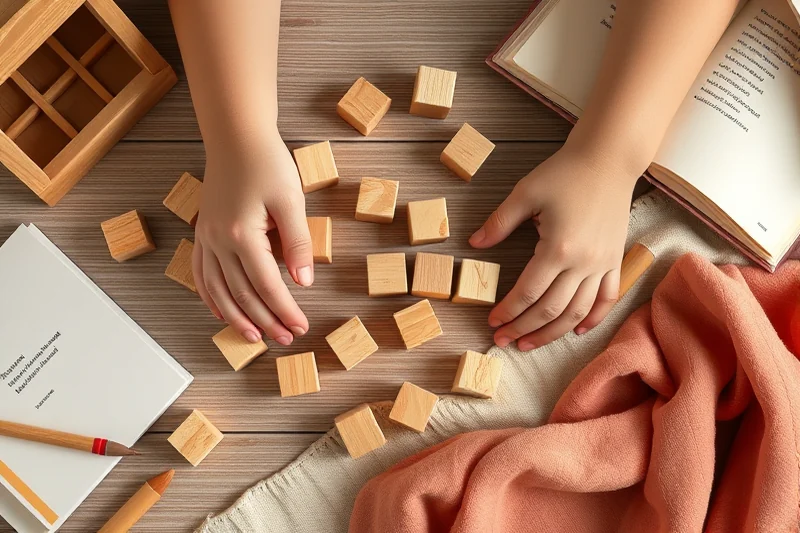
When my son plays with water, he’s not just having fun — he’s learning about gravity, density, and measurement. When he builds with blocks, he’s learning about balance, symmetry, and spatial awareness.
There’s also a lot of research showing that unstructured play is better for creativity and emotional intelligence. It allows children to explore their emotions, practice social skills, and learn how to solve problems on their own.[1]
Related: Sensory play for beginners for families
Related: What s sensory input
Related: Play by ear meaning
How to Keep It Simple and Sustainable
I try to keep things simple by using what we have around us. We don’t have a special toy box — we have a box of materials that we use for play. It’s a mix of things like fabric, sticks, and containers — all things that we can use in different ways.
Sustainability is also important. I’ve found that reusing old materials — like cardboard, fabric, or even plastic containers — is a great way to keep things affordable and eco-friendly. It also teaches my son about reuse and repurposing.
The key is to be flexible. What works for one family may not work for another. The goal is to find what works for your family and to keep it simple and sustainable over time.
⭐ Classic
A traditional play box with a mix of building and sensory materials.
💰 Budget
A no-cost version that uses items from around the house.
⚡ Extra-Fast
A quick and easy play box that can be assembled in minutes.
✨ Depth
An in-depth version that includes more advanced materials and activities.
🥗 Light
A minimalist version that focuses on simple, open-ended exploration.
| The mistake | Why it happens | The fix |
|---|---|---|
| Trying to force a specific learning outcome | This can make the experience feel like a lesson rather than play. | Let your child lead the play. If they aren’t interested in a particular activity, move on to something else. |
| Using too many materials at once | This can overwhelm your child and make it hard for them to focus on any one activity. | Start with a few simple items and gradually add more as your child becomes comfortable with the concept. |
| Forgetting to clean up | This can lead to clutter and make it hard to find materials the next time you want to play. | Make clean-up part of the play experience. Involve your child and turn it into a fun activity. |
| Not adapting to your child’s interests | This can make the play experience feel forced and unenjoyable for your child. | Observe your child’s interests and adapt the materials and activities to match their preferences. |
What You'll Need tap to check off
- 1 lb Cardboard boxes
- ½ cup Fabric scraps
- Natural items (pebbles, sticks, etc.) to taste
Method tap a step when done
- Gather all the materials you want to include in your play box. This could include cardboard boxes, fabric scraps, pebbles, sticks, and anything else that inspires creativity.
- Cut the cardboard boxes into smaller pieces if needed. This makes them easier to handle and more versatile for play.
- Sort the materials into categories. For example, you could have a section for building materials, a section for sensory items, and a section for creative items.
- Place all the materials into a large container or box. Make sure to label each section so that your child knows what each part is for.
- Let your child explore and play with the materials. Encourage them to build, sort, and create.
- Clean up together after each play session. This is a great way to teach responsibility and teamwork.
Key Facts
Related: Homemade play based preschool curriculum
Related: Baby sensory videos
Related: The store play
Play-based Learning Without Tools
Related: Natural play based learning ideas
Related: What is to play by ear
Related: Play to area
The Role of Imagination in Tool-Free Play-Based Learning
Imagination is the unsung hero of tool-free play-based learning, transforming ordinary moments into rich learning experiences.
I’ve watched my daughter turn a cardboard box into a spaceship, a castle, and even a grocery store—all without any purchased materials. This kind of imaginative play isn’t just fun; it’s a powerful way for children to develop problem-solving skills, creativity, and emotional intelligence. When kids use their imagination, they’re essentially building cognitive flexibility and learning how to think outside the box—literally. I’ve noticed that these moments of imaginative play often lead to deeper conversations and spontaneous learning, like counting items in a pretend store or discussing the journey of a spaceship.
Imagination also allows children to explore roles and perspectives in ways that are not always possible with structured tools. My son, for instance, once spent an hour pretending to be a doctor, diagnosing imaginary patients and even creating a makeshift stethoscope from a rolled-up towel. This kind of role-play helps children understand social dynamics, practice empathy, and develop language skills. It’s incredible how much learning can happen when we let kids lead the play, rather than directing it. I’ve learned that sometimes the best learning happens when we step back and let their imaginations take over.
To support this kind of learning, I’ve made a point to create environments that spark curiosity and encourage open-ended exploration. I fill our play areas with things like fabric scraps, paper rolls, and natural items from our walks. These materials become the building blocks for their imaginations. I’ve also noticed that when we avoid over-directing or over-structuring play, children tend to engage more deeply and for longer periods. It’s a reminder that sometimes the most powerful learning tools are the ones we don’t even realize we’re using.
Common Questions
What if I don’t have access to natural materials?
How do I keep the play box organized?
Can I use this with older children?
How often should I rotate the materials in the play box?
References
- PDF The Powerful Role of Play in Early Education (cde.ca.gov)
- Play-Based Learning (education.mn.gov)
- PDF Play-Based - New Hampshire Department of Education (education.nh.gov)
- PDF REFEREED ARTICLE Play-Based Learning: Playing the Way to Rich Learning ... (files.eric.ed.gov)
- Play-Based Learning - New York State Education Department (nysed.gov)
Cite this guide
PlayMessy (2026). Play-based Learning Without Tools. https://playmessy.com/play-based-learning-without-tools/
Feel free to cite or share this guide.