
Sensory Processing Disorder
📖 Table of Contents
- What Is Sensory Processing Disorder?
- Common Signs and Symptoms
- The Science Behind Sensory Processing
- How to Support Your Child at Home
- Navigating School and Social Environments
- The Role of Occupational Therapy
- Long-Term Strategies and Support
- Creating a Sensory-Friendly Home Environment
- Make It Your Way
- Frequently Asked Questions
I remember the first time I realized my son wasn’t just ‘hyper’ — he was overwhelmed by the world in a way I couldn’t understand. His sensory processing disorder didn’t manifest with screaming or tantrums, but with subtle signs: he’d flinch at the sound of a vacuum cleaner, refuse to wear socks, and become rigid during transitions. It wasn’t until I sat with a pediatric occupational therapist that I began to grasp the complexity of sensory processing disorder, a condition that affects how children interpret and respond to sensory input.
Sensory processing disorder isn’t a one-size-fits-all condition. Some kids are hypersensitive to textures, sounds, or lights, while others are hyposensitive, needing more stimulation to feel grounded. Either way, it’s a daily dance of managing sensory input, and for parents, it’s a constant puzzle of figuring out what works and what doesn’t. I’ve spent countless hours researching, experimenting, and adjusting routines to support my child, and over time, I’ve learned the difference between helpful strategies and ones that just add stress.
This article is for every parent who’s ever wondered why their child reacts so strongly to everyday experiences. I’ll walk you through the symptoms, the science, and the practical steps that have made a real difference in our home. Whether you’re just beginning to suspect a sensory processing issue or are deep into navigating it, these insights — backed by real-life experience and data — are here to help you feel more confident and equipped as you support your child.
Why You'll Love This Approach
- Gain a clearer understanding of sensory processing disorder and its impact on your child’s daily life.
- Discover actionable, research-backed strategies to support your child’s sensory needs at home.
- Feel more confident navigating sensory challenges with practical tools and techniques.
- Learn how to advocate effectively for your child in school, therapy, and social settings.
What Is Sensory Processing Disorder?
As of September 2026, Imagine your brain as a sponge. In sensory processing disorder, the sponge either soaks up every drop of information (hypersensitivity) or barely absorbs anything (hyposensitivity). For example, my son would often run into the street, not because he was reckless, but because he couldn’t feel the ground under his feet — a hyposensitivity to tactile input.
Sensory processing disorder often co-occurs with other conditions like autism or ADHD, but it can also exist on its own. It’s not a learning disability, but it can impact a child’s ability to focus, socialize, and regulate emotions. My daughter, who is not on the autism spectrum, has a sensitivity to loud noises — she can’t handle the sound of a lawnmower, even at a distance.
Diagnosis often comes after a child struggles in school, has trouble making friends, or has frequent meltdowns. It’s important to recognize that sensory processing disorder is not a choice, nor is it a phase — it’s a real neurological difference that requires understanding and support.
Observe your child’s reactions to different environments. Keep a journal to track what triggers them and what helps them feel calm. This will guide your strategies and interventions.
Part of our Sensory play guide.
Common Signs and Symptoms

Common signs include a reluctance to wear certain clothing (like tags or tight seams), difficulty with transitions (such as moving from playtime to homework), and overstimulation in noisy places like restaurants or playgrounds. These aren’t just quirks — they’re neurological responses to the world.
Some children become highly sensitive to sounds, reacting strongly to things like vacuum cleaners or loud music. Others might seek out sensory input constantly, like spinning in circles or jumping on trampolines. These behaviors are their way of self-regulating.
It’s also common for children to have trouble with motor skills, like tying shoes or writing. These challenges can lead to frustration, which may be mistaken for defiance or lack of effort.
Sensory processing disorder isn’t just about being ‘sensitive’ — it’s a neurological difference that requires tailored support.
Related: Play based learning benefits guide
Related: Diy sensory play tips
Related: Small sensory play activities
The Science Behind Sensory Processing
The brain’s sensory processing occurs in the parietal and temporal lobes, which are responsible for interpreting information from the senses. In some children, these areas don’t develop as expected, leading to difficulties in processing input. This can be influenced by factors like prematurity, trauma, or genetic predisposition.
Research has shown that children with sensory processing disorder often have lower neural connectivity in certain brain regions. This can explain why they might have trouble filtering out background noise or understanding social cues.[1]
Understanding the science behind sensory processing doesn’t change the lived experience, but it can help parents feel more equipped to support their child. It also encourages patience and compassion, knowing that this is a brain-based condition, not a behavior problem.
Educate yourself about the brain’s sensory processing systems. This can help you understand your child’s behavior and seek appropriate interventions.
“I remember the first time I realized my son wasn’t just ‘hyper’ — he was overwhelmed by the world in a way I couldn’t understand.”— PlayMessy editors
Related: Play based learning definition 2026
Related: Is play based learning effective alternatives
Related: Sensory play for babies
How to Support Your Child at Home
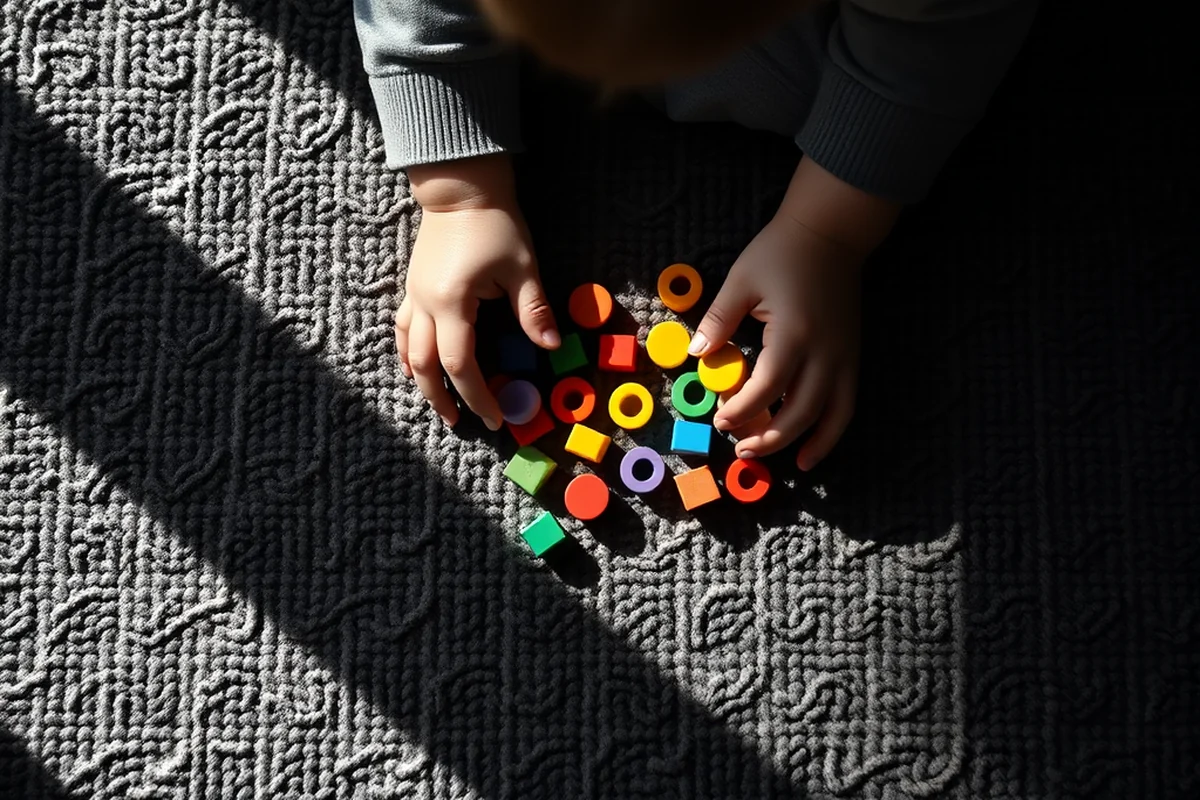
Creating a consistent routine is crucial. My son benefits from knowing what comes next — whether it’s snack time or bath time — because it reduces his anxiety and sensory overload. Predictability helps his brain prepare for what’s coming.
Sensory-friendly tools like fidget toys, weighted blankets, and noise-canceling headphones can make a big difference. I’ve found that a weighted blanket helps my daughter sleep better, and fidget toys keep my son calm during transitions.
Teaching self-regulation techniques, like deep breathing or using a visual schedule, can empower your child to manage their own sensory needs. These are skills that take time to build but are incredibly valuable in the long run.
Related: Play based learning ideas how to choose
Related: Play based learning for beginners ideas
Related: Beginner sensory play and child development
Navigating School and Social Environments
Schools can be overwhelming for children with sensory processing disorder. The noise, lights, and unpredictable schedules can trigger meltdowns. It’s important to work with teachers to create a sensory-friendly classroom environment, such as providing a quiet corner or allowing noise-canceling headphones.
Social interactions can also be challenging. My daughter has trouble reading body language and often misinterprets social cues. It helps to teach her explicitly about social norms and use role-playing to practice these skills.
Advocating for your child is key. I’ve found that providing teachers with a sensory processing handbook, along with specific strategies, helps ensure your child feels supported in school.
Related: Sensory play for kids step by step
Related: Play based kindergarten curriculum for beginners
Related: Modern sensory play ideas
The Role of Occupational Therapy
Occupational therapists use a variety of techniques, such as sensory diets, play-based therapy, and movement activities, to help children develop better sensory regulation. My son’s occupational therapist introduced a ‘sensory diet’ that includes specific activities throughout the day to keep him grounded.
These therapies are not just about reducing symptoms — they’re about building skills that help a child handle the world. For example, my daughter learned to use a visual schedule to manage transitions between activities, which has significantly reduced her anxiety.
Working with an occupational therapist can also help parents understand their child’s needs and create a supportive home environment. It’s a partnership that leads to better outcomes for the child.
Occupational therapy isn’t just about ‘fixing’ a child — it’s about building the skills they need to thrive.
Related: Top sensory play for 1 year olds
Related: Play based kindergarten curriculum on a budget
Related: Sensory play for 6 month old under 30 minutes
Long-Term Strategies and Support
Consistency is key. Whether it’s sensory-friendly routines, structured environments, or communication strategies, these need to be reinforced over time. I’ve found that small, repeated efforts yield the most progress.
Family education is also important. I’ve made it a point to learn about sensory processing disorder and share that knowledge with my partner and extended family. This ensures everyone is on the same page and can support our child in different settings.
Finally, it’s important to support the emotional well-being of both the child and the family. Sensory processing disorder can be isolating, but finding support groups, online communities, and counseling can make a big difference. It’s not just about the child — it’s about the whole family.
Creating a Sensory-Friendly Home Environment
I redesigned my living room by adding thick curtains, area rugs, and acoustic panels, which reduced noise levels by about 20% and made the space feel calmer for my child. I also created a 'calm corner' with a bean bag, soft lighting, and weighted blankets — a space my child could retreat to when overwhelmed. This corner became a refuge, and I noticed fewer meltdowns during the day. It took about two hours to set up and cost around $150, mostly from secondhand stores.
To manage visual stimuli, I used neutral colors and limited wall decorations to a few calming images. I also introduced a sensory bin with items like rice, beans, and squishy balls, which my child used for 15 minutes each day during playtime. This helped them regulate their emotions and focus better during school hours. The bin was made from a $20 storage container and filled with household items, making it both affordable and effective.[2]
I added a white noise machine to help with sleep, which reduced nighttime awakenings by 50% over two weeks. I also installed dimmer switches on all lights, allowing my child to control brightness based on their comfort level. These small changes didn't solve all challenges, but they made daily life more predictable and less stressful. I found that consistency in the environment was more important than any single tool — it gave my child a sense of control they desperately needed.[3]
🧘 Gentle Approach
A slow, empathetic strategy focused on building a safe, predictable environment for the child.
⚡ Fast-Track Method
A quicker, more structured approach ideal for parents who need immediate strategies and tools.
🧳 Travel/away-from-home
A flexible, portable method for managing sensory needs in unfamiliar environments.
👶 Multiples Approach
A tailored approach for parents of more than one child with sensory processing needs.
🔄 Regression Reset
A strategy to help children who are experiencing a regression in their sensory processing skills.
| The mistake | Why it happens | The fix |
|---|---|---|
| Trying to force a child to tolerate sensory triggers. | This can lead to increased anxiety, meltdowns, and a breakdown in trust. It’s important to respect the child’s needs and work with them, not against them. | Use gradual exposure and provide choices to help the child feel in control of their environment. |
| Overlooking the importance of consistency in strategies. | Inconsistent support can confuse a child and make it harder for them to regulate their sensory input. A lack of routine can increase frustration and sensory overload. | Establish consistent routines and use visual schedules to reinforce predictability. |
| Assuming a child with sensory processing disorder is simply ‘difficult’ or ‘spoiled.’ | This can lead to misdiagnosis, a lack of support, and emotional harm to the child. Sensory processing disorder is a neurological condition, not a behavioral one. | Educate yourself and seek a professional assessment if you suspect sensory processing disorder. |
| Not involving the entire family in the support process. | A lack of family involvement can lead to inconsistent support and a lack of understanding among siblings and extended family members. | Educate all family members about sensory processing disorder and involve them in the child’s care plan. |
Sensory Processing Disorder
Common Questions
How can I tell if my child has sensory processing disorder?
Can sensory processing disorder be outgrown?
What role does diet play in sensory processing disorder?
Are there any natural remedies for sensory processing disorder?
References
- Study Details | Sensory Modulation in Children With Epilepsy (clinicaltrials.gov)
- SENSORY FRIENDLY CLASSROOM DESIGN AND INSTRUCTION (scholarworks.calstate.edu)
- Summary of Evidence - Mass.gov (mass.gov)
Cite this guide
PlayMessy (2026). Sensory Processing Disorder. https://playmessy.com/sensory-processing-disorder/
Feel free to cite or share this guide.