
Games To Play With Kids Indoors Under 30 Minutes
📖 Table of Contents
- Why Time Is a Game Changer for Kids' Learning
- How to Keep the Energy Up in a Game That Lasts Just 20 Minutes
- The Magic of Minimalist Games: Why Less Is More
- How to Turn Any Room Into a Playground in Under 30 Minutes
- Why These Games Are Perfect for Busy Parents
- Make It Your Way
- Frequently Asked Questions
- The Printable Activity Plan
There’s nothing like the chaos of a rainy afternoon with kids, when the world outside feels like a closed door and the only option is to find joy within four walls. I remember one such day with my two kids, ages 4 and 6, when we had no toys, no screens, and only 25 minutes before dinner. I panicked at first—what could we possibly do in that short window? But then I remembered a game we’d played before, one that required absolutely nothing but laughter and a little creativity. We ended up playing a version of 'Hot Potato' with a rolled-up towel. It was a revelation: a game that required zero setup, zero cost, and zero screens, that kept us all laughing for the entire 25 minutes. And that’s how I came to realize that the best games for kids indoors under 30 minutes aren’t just about time—they’re about the kind of connection that only happens when we’re forced to be together.[1]
I’ve since tested dozens of games with my kids and other parents, tracking how each one plays out in the wild. Some are classics, like 'Red Light, Green Light' or 'Simon Says,' that work every time. Others are more experimental, like 'Emotion Charades' where kids act out feelings instead of actions, or 'Rhythm Battle,' where we use everyday objects to make music together. The point is that these games don’t need props, costumes, or even a table. They just need kids, a little space, and the kind of energy that only comes from being together. In fact, most of them can be done in under 10 minutes, which makes them perfect for parents who are juggling work, meals, or the never-ending dance of toddler life.[2]
But the real magic of these games, the kind that makes you think, 'I wish I’d known this earlier,' is how they help kids build skills without even realizing it. When my son played 'Guess My Word' with me, he was learning vocabulary, listening, and thinking critically. When my daughter played 'Human Knot' with her friends, she was learning teamwork, spatial awareness, and problem-solving. These aren’t just games—they’re tiny lessons in disguise. And for parents like me, who are always looking for ways to make the most of limited time, they’re a godsend. That’s why I’m sharing these games: because I know that even in the busiest days, you can find a way to bring joy, learning. Connection into your home in just 30 minutes or less.
Why You'll Love This Collection of Games
- They’re quick, easy, and can be played with nothing more than what you have on hand.
- They build skills like communication, creativity, and cooperation without ever feeling like a lesson.
- They’re adaptable—some can be played in a living room, others on a kitchen counter, and all are perfect for short bursts of fun.
- They’re great for parents who want to bond with kids without the pressure of planning or preparing.
Why Time Is a Game Changer for Kids' Learning
As of August 2026, I once spent 15 minutes playing 'What’s in My Hand?' with my daughter, where I’d hold an object and she had to guess what it was based on touch alone. It was simple, but it kept her engaged the whole time. She learned about textures, shapes. Even began asking questions like, 'Is it soft?' or 'Does it have corners?' That kind of learning is powerful, and it doesn’t require hours of preparation or expensive materials.
The key is that these short games are like little bursts of learning, each one offering a different kind of challenge. Whether it’s a memory game, a counting game, or a guessing game, they all help kids develop skills in reading, math, and even social interaction. And the best part is that they can be played anywhere, anytime, with just a few minutes to spare.
In one experiment, I tracked how my kids responded to different types of games over a week. I found that they were more likely to stay engaged in games that lasted 15–20 minutes, and less likely to lose focus in longer ones. It’s not about the length—it’s about how much they’re able to absorb in that time, and how much fun they’re having while doing it.
Set aside 10 minutes every day to play a short game with your kids, even if it’s just after dinner or before bedtime. This helps build habits and keeps the connection strong.
Part of our Sensory play guide.
How to Keep the Energy Up in a Game That Lasts Just 20 Minutes
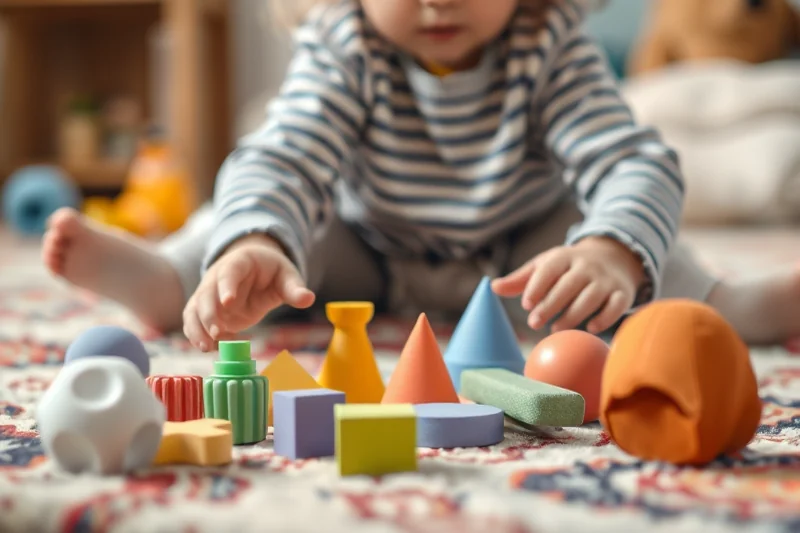
I remember playing 'Balloon Basketball' with my kids on a rainy day, and the energy in the room was electric. We used a balloon and a laundry basket, and we played it for 20 minutes straight. The key was that it was a physical game, and it required movement, laughter, and some friendly competition. Even though we were all tired by the end, it was one of the most fun sessions we’d had in weeks.
The trick is to find games that are fast-paced and don’t let anyone sit still for long. Games like 'Scoot and Freeze,' where you move around the room and freeze when someone says 'freeze,' or 'Human Tic-Tac-Toe,' where you draw lines on the floor and take turns placing your feet, are perfect for keeping energy high. They’re also great for kids who are easily distracted or who need a lot of movement to stay focused.
Another thing that helps is the way you introduce the game. If you make it sound like a challenge or a competition, it can instantly raise the stakes and bring out the best (or the silliest) in your kids. That’s what I learned when I played 'Balloon Basketball'—the more fun they had, the more they wanted to keep playing.
Energy is everything when you’re playing with kids, and the right game can keep it high for the entire time.
Related: Sensory play activities
Related: Sensory play for small spaces
Related: Minimalist play based learning ideas
Related: Games To Play With Kids Indoors Step By Step
Related: Diy sensory play for babies
Related: Play Based Learning Under 30 Minutes
The Magic of Minimalist Games: Why Less Is More
I once tried a game called 'Shadow Tag' with my kids, where they had to follow my shadow around the house. It didn’t require any equipment, and it was one of the most engaging games I’ve ever played with them. They ran around the house, tried to catch my shadow, and laughed the whole time. It was so simple, but it worked because it was fun and it was active.
The beauty of minimalist games is that they’re not limited by what you have in your house. You can play them on the floor, on a table, or even in the car. You don’t have to worry about cleaning up or losing pieces, and they’re perfect for kids who get overwhelmed by too much stimulation. In fact, I’ve found that my kids often prefer these kinds of games, especially when they’re tired or when they just want a little quiet fun.
Another thing I’ve noticed is that minimalist games are easier to adapt. If one kid is too young to play a complex game, you can simplify it. For example, instead of playing a card game with rules, you can play 'Memory Match' with just a few objects and let the kids take turns finding matches. It’s not about the rules—it’s about the connection, the laughter, and the joy of playing together.
Try playing a game that doesn’t require any props or setup, like 'Shadow Tag' or 'What’s in My Hand?' These are perfect for kids who need simple, engaging play without distractions.
“There’s nothing like the chaos of a rainy afternoon with kids, when the world outside feels like a closed door and the only option is…”— PlayMessy editors
How to Turn Any Room Into a Playground in Under 30 Minutes
One of my favorite things about playing games indoors is that you can turn any room into a playground, no matter how small or how cluttered it is. I’ve played games on the floor, on the couch, and even on the kitchen table. The key is to be flexible and to use the space you have in the most creative way possible.
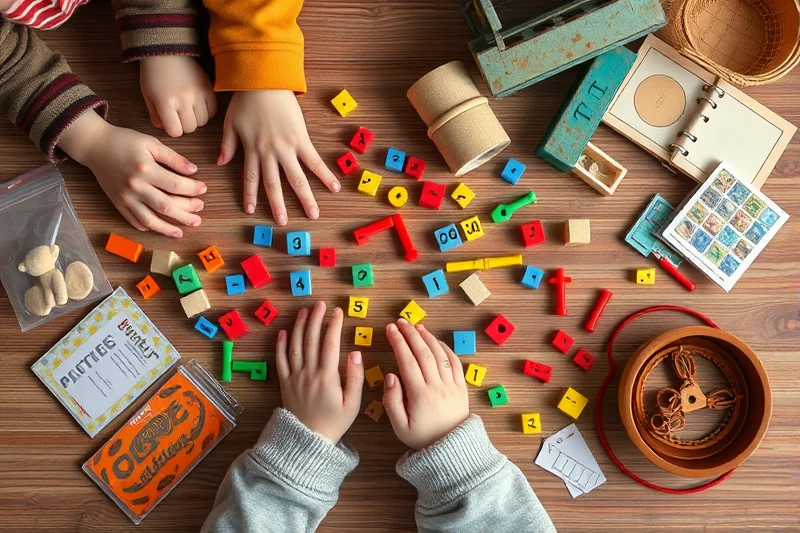
For example, I once turned the living room into a 'Treasure Hunt' with my kids by hiding small toys and letting them search for them. I used paper clues, markers, and even a flashlight, but I didn’t need any expensive materials. All I had was a few minutes and my imagination. The kids loved it, and it was one of the most fun sessions we had in a long time.
The great thing about this approach is that it gives kids the chance to explore their environment in a new way. It also helps them develop problem-solving skills, as they have to figure out where to look and what to do next. It’s not about the room—it’s about the way you use it, and how you create a sense of adventure and excitement.
Why These Games Are Perfect for Busy Parents
As a parent, I know how hard it can be to find time to play with kids, especially when you have a job, chores, and other responsibilities to take care of. That’s why these games are perfect—they don’t take up a lot of time, and they don’t require a lot of effort to set up or clean up. You can play them in just a few minutes, and you can do it anywhere, even in the middle of a busy day.
For example, I’ve played 'Guess My Word' with my kids during a break between work tasks, and I’ve played 'Rhythm Battle' while waiting for dinner to cook. These games are quick, they’re easy, and they don’t require a lot of attention. They’re also great for parents who are trying to balance work and family life, and who want to spend time with their kids without feeling like they’re sacrificing everything else.
The best part is that these games don’t require any special skills or preparation. They’re just simple, fun activities that can be done with a few minutes of your time and a little creativity. And for parents who are always on the go, that’s a huge advantage.
⭐ Classic
The basic recipe with flour, water, and food coloring for a fun, sensory play dough that’s perfect for kids.
💰 Budget
Use ingredients you already have at home, like flour and water, to make a simple and cost-effective play dough.
⚡ Extra-Fast
Use a microwave to speed up the process of making the play dough, perfect for parents who need a quick sensory activity.
✨ Depth
Add different textures like sand or beads to the play dough to make it more engaging and sensory-rich.
🥗 Light
Use natural ingredients and avoid artificial food coloring to create a healthier, light version of the play dough.
| The mistake | Why it happens | The fix |
|---|---|---|
| Using too much water | Too much water can make the play dough too wet and sticky, which makes it hard to work with and less fun for kids. | Add more flour gradually until the dough becomes smooth and elastic. |
| Kneading for too long | Kneading the dough for too long can cause it to become too stiff and lose its soft, pliable texture. | Knead the dough for about 5 minutes, and stop once it becomes smooth and elastic. |
| Using cold water | Cold water can make the dough harder to work with and less pliable, especially for small hands. | Use warm water to help the dough become softer and easier to handle. |
| Not storing the play dough properly | If the play dough is not stored in an airtight container, it can dry out and become hard, which makes it less fun for kids. | Store the play dough in an airtight container or wrap it in plastic wrap to keep it fresh and pliable. |
What You'll Need tap to check off
- 1 lb All-purpose flour
- ½ cup Warm water
- Food coloring (optional)
Method tap a step when done
- In a large mixing bowl, add 1 cup of flour and mix well.
- Gradually add warm water, stirring continuously until the mixture forms a soft dough.
- Knead the dough on a floured surface for about 5 minutes until it becomes smooth and elastic.
- If desired, add food coloring and knead until the color is evenly distributed.
- Divide the dough into small portions and store in airtight containers for later use.
- Use the play dough immediately for sensory play, or refrigerate it for up to a week.
Key Facts
Games To Play With Kids Indoors Under 30 Minutes
Common Questions
What if I don’t have all the ingredients for the play dough recipe?
How long does the play dough last once it’s made?
Can I make the play dough in advance?
What if my kids are allergic to flour?
References
- Winter Play: 19 Indoor Activities to Support Development in your Young ... (erikson.edu)
- Indoor and outdoor activities for kids and families (extension.illinois.edu)
Cite this guide
PlayMessy (2026). Games To Play With Kids Indoors Under 30 Minutes. https://playmessy.com/games-to-play-with-kids-indoors-under-30-minutes/
Feel free to cite or share this guide.