Play Based Learning Under 30 Minutes
📖 Table of Contents
- How to Start Play-Based Learning in Just 15 Minutes
- The Science Behind Play-Based Learning
- How to Keep Your Child Engaged for 30 Minutes
- The Benefits of Play-Based Learning for Toddlers and Preschoolers
- How to Incorporate Play-Based Learning into Your Daily Routine
- Make It Your Way
- Frequently Asked Questions
- The Printable Activity Plan
I remember the first time my toddler sat for a full 20 minutes, completely absorbed in stacking wooden blocks, her eyes wide with fascination. It wasn’t a flash of genius or a moment of sudden comprehension — it was just play, but the kind that quietly laid the groundwork for counting, spatial awareness, and problem-solving. That afternoon, I realized that learning didn’t have to be a scheduled, structured event. It could be found in the clatter of a kitchen, the flick of a toy, or even the way sunlight danced across the floor. Play-based learning under 30 minutes can be just as powerful as any lesson plan, and it doesn’t require hours of prep or a full day to make an impact.[1]
I used to think that for learning to be effective, it had to be deliberate — a lesson here, an activity there, all planned with the precision of a teacher’s manual. But what I discovered through trial and error — and a lot of messy kitchen floors — is that some of the most meaningful learning comes from the simplest, most spontaneous moments. Whether it’s using playdough to explore shapes, sorting laundry by color, or singing songs with rhythm, these unscripted, short bursts of engagement are where the magic happens. The key is to create an environment where curiosity is the driver, not the clock.
Play-based learning under 30 minutes is not about making up for lost time or cramming in knowledge. It’s about finding moments that feel natural, that fit into the rhythm of daily life, and that are just as valuable as any formal lesson. It’s about letting your child lead the way, whether they’re building a tower, asking questions, or just laughing at their own missteps. When I started embracing this approach, I noticed my daughter picking up new vocabulary, solving problems on her own, and even showing an interest in numbers — all through play. It wasn’t just learning — it was living.[2]
Why You'll Love This Play-Based Learning Approach
- It fits seamlessly into your day without overwhelming your schedule.
- It engages your child’s natural curiosity and creativity.
- It builds foundational skills without the pressure of formal lessons.
- It strengthens your bond as you learn and play together.
How to Start Play-Based Learning in Just 15 Minutes
As of August 2026, you don’t need a full day or an elaborate setup to start play-based learning. In fact, the most effective sessions often happen in the span of 15 to 30 minutes, as long as the child is fully engaged. I’ve found that the key is to create an environment that invites curiosity — a table with blocks, a tray of sorting cups, or a blanket fort that feels like a safe space for exploration.[3]
When I set up a play area with just a few items — like wooden blocks, a small bin of beads. A set of colored cups — my daughter would spend an hour or more experimenting with balance, patterns, and counting. It wasn’t structured, but it was rich with learning. The goal is to let the child lead the way, rather than pushing them toward a specific outcome.
I’ve also noticed that play-based learning works best when it’s embedded in daily routines. Whether it’s sorting laundry by color, counting spoons before a meal, or using blocks to build a ‘house’ with a specific number of rooms, these moments are not only educational but also deeply bonding.
Use items you already have at home — like buttons, socks, or even kitchen utensils — to create engaging learning opportunities.
Part of our Sensory play guide.
The Science Behind Play-Based Learning
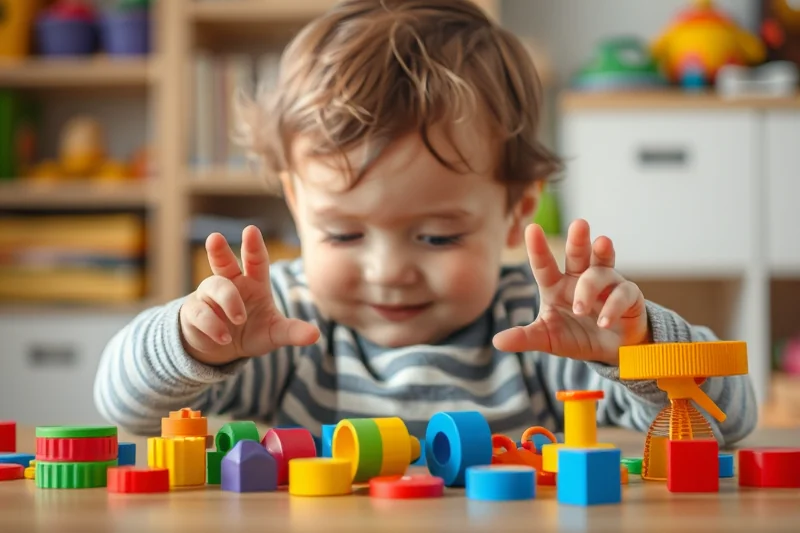
Studies have shown that play is not only a child’s favorite way to learn, but also the most effective. According to the American Academy of Pediatrics, play is essential for the development of cognitive, social, and emotional skills. It’s not just about having fun — it’s about building the foundation for problem-solving, creativity, and resilience.[4]
What makes play-based learning so powerful is that it allows children to explore at their own pace, make mistakes, and learn from them. Unlike structured lessons, which often focus on rote memorization, play-based learning encourages curiosity and discovery. For example, when my daughter was sorting beads by color, she wasn’t just learning about colors — she was learning about categorization, comparison, and even early math skills like counting.
One of the most impressive findings from the research is that play-based learning under 30 minutes can lead to long-term skill retention. Because the learning is so engaging and meaningful, children are more likely to remember and apply what they’ve learned in the future.[5]
Play is the highest form of learning.
Related: Diy play based kindergarten curriculum
Related: Sensory play benefits tips
Related: Simple play based learning definition
Related: Top sensory play for beginners
Related: Best is play based learning effective
How to Keep Your Child Engaged for 30 Minutes
Keeping a child engaged for even 15 minutes can feel like a challenge, but there are a few strategies that have worked for me. One of the most important is to let the child choose what they want to play with. When they have a sense of autonomy, they are more likely to stay focused and interested.
I’ve also found that mixing in variety helps maintain engagement. If I set up a play area with a few different activities — like a puzzle, a toy car track. A set of building blocks — my daughter tends to cycle through them, keeping her attention for longer. It’s also important to be present and participate, even if just by asking questions or offering encouragement.
Another tip is to keep the play area free of distractions — like turning off the TV or phone. When I’ve done that, I’ve noticed a marked increase in the length of time my daughter stays engaged in learning activities. It might not sound like much, but every minute counts with learning through play.
Minimize distractions, provide a variety of materials, and be ready to join in the learning — even if it’s just by asking questions.
“I remember the first time my toddler sat for a full 20 minutes, completely absorbed in stacking wooden blocks, her eyes wide with fascination.”— PlayMessy editors
The Benefits of Play-Based Learning for Toddlers and Preschoolers
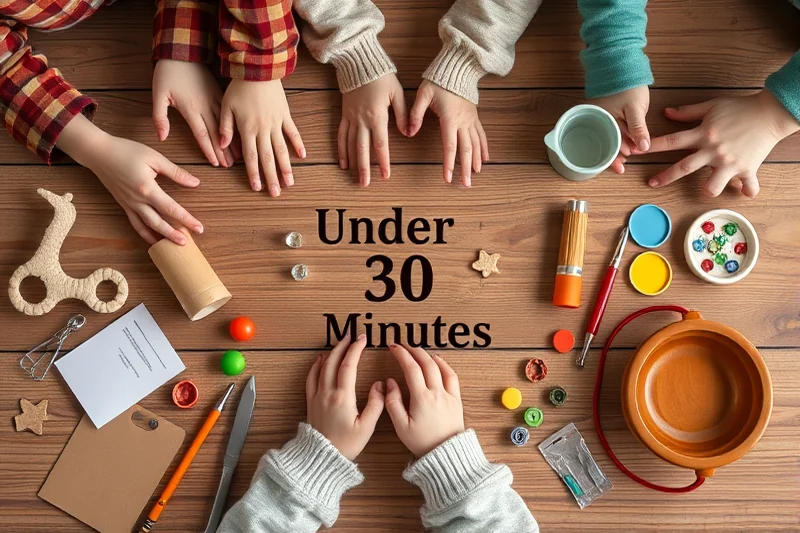
One of the most significant benefits of play-based learning is its ability to support a child’s emotional development. When children play, they learn to express their feelings, manage frustration, and build empathy. I’ve seen my daughter use role-play to practice empathy by pretending to be a doctor, caring for her stuffed animals and showing compassion when they were ‘sick.’
Social skills are also a key part of play-based learning. When children play with others, they learn to take turns, share, and resolve conflicts. I’ve noticed that even in simple games like building a block tower together, my daughter has learned how to compromise and collaborate with others.
Perhaps most importantly, play-based learning helps build confidence. When children are given the freedom to explore and make mistakes, they become more resilient and self-assured. They learn that learning is a process, not a race — and that’s a lesson that lasts a lifetime.
How to Incorporate Play-Based Learning into Your Daily Routine
One of the best ways to make play-based learning a regular part of your day is to embed it into your routine. Whether it’s during mealtime, a walk in the park, or even bath time, there are countless opportunities to learn through play. For example, I’ve found that counting spoons before a meal or sorting laundry by color can be both fun and educational.
When we go on walks, I often use that time to talk about shapes, animals, or even the weather. My daughter loves pointing out different types of trees or counting birds in the sky. These moments aren’t just about learning — they’re about making connections and building a deeper understanding of the world.
I’ve also found that incorporating music and storytelling into daily routines can be a powerful way to support learning. Whether it’s singing songs that teach the alphabet or reading a picture book that sparks discussion, these moments help reinforce learning in a natural, meaningful way.
⭐ Classic
A simple, traditional sorting tray with dried beans and rice, perfect for young learners.
💰 Budget
Use items you already have at home, like lentils, pasta, or even small toys for sorting.
⚡ Extra-Fast
Skip the rice and use just dried beans for a quicker sorting activity that still supports learning.
✨ Depth
Add more layers by sorting beans not just by color, but also by size or texture.
🥗 Light
Use a combination of rice and dried beans for a low-calorie, high-engagement sorting activity.
| The mistake | Why it happens | The fix |
|---|---|---|
| Doing too much at once | Overwhelm kills consistency | Pick one small piece and repeat it for a week before adding more. |
| Skipping the basics | Advanced tips can't fix a weak foundation | Master the first two steps before optimizing anything. |
What You'll Need tap to check off
- 1 lb Mixed dried beans (black, red, white)
- ½ cup Rice
- Food coloring (optional, for sorting by color)
Method tap a step when done
- Rinse the dried beans in a colander to remove any debris and set aside.
- In a large bowl, mix the beans with the rice, ensuring that the colors are well distributed (if using food coloring, this step is optional).
- Pour the mixture into a large, shallow container or tray, and let it sit for at least 10 minutes to allow the beans and rice to separate slightly.
- Use small containers or labeled cups to sort the beans by color. This is a great activity for young children to practice categorization and counting.
- Once the sorting is complete, you can use the rice and beans to make edible play dough or store them for future use. If you’re not using them immediately, store in an airtight container to keep them fresh.
- Clean up the tray and containers, and enjoy a fun, educational activity that can be repeated several times with different color combinations.
Key Facts
Play Based Learning Under 30 Minutes
Common Questions
How long should a play-based learning session last?
What if my child is not interested in the activity I set up?
Can play-based learning be used for older children?
How do I know if my child is learning through play?
References
- PDF The Powerful Role of Play in Early Education (cde.ca.gov)
- The Power of Play-Based Learning in Early Childhood Education (cune.edu)
- Play-Based Learning (education.mn.gov)
- New Online Modules for Educators Cultivate Joyful Learning (nces.ed.gov)
- PDF The Power of Play- Early Learning Institute (nysed.gov)
Cite this guide
PlayMessy (2026). Play Based Learning Under 30 Minutes. https://playmessy.com/play-based-learning-under-30-minutes/
Feel free to cite or share this guide.