Best Sensory Play Budget Ideas
📖 Table of Contents
When my son was 18 months old, I watched in awe as he sat cross-legged on the floor, digging through a bin of kinetic sand and giggling every time he made a new shape. It was one of those moments that made me realize how powerful sensory play can be — not just for fun, but for development, focus, and even calming little minds. As a parent on a tight budget, I wanted to find ways to bring those kinds of experiences into our home without breaking the bank. I discovered that sensory play doesn’t have to cost a fortune. The best sensory play budget ideas, I learned, are often the ones that come from everyday objects we already have at home, or from small, thoughtful purchases that make a big difference.
Sensory play is more than just a way to keep kids entertained. It’s a cornerstone of early childhood development, helping babies and toddlers build neural connections, improve fine motor skills, and express emotions in safe, creative ways. But for parents who are juggling work, bills. The endless demands of raising a child, it can be hard to justify spending money on things that seem like 'toys' when there are so many other costs to cover. That’s where the best sensory play budget ideas come in — they’re the kind of solutions that don’t just save money, but also save time and make everyday moments feel like magic.[1]
I’ve spent the last few years experimenting with different sensory play setups, from DIY bins to low-cost sensory kits. I’ve learned that the most effective ones are the ones that use what we already have. Whether it’s a rice-filled bin, a simple sensory board, or even a homemade playdough recipe, the best sensory play budget ideas are often the ones that are flexible, safe. Easy to clean up. If you’re looking for ways to bring more sensory play into your home without spending a lot, I’m here to help — with real, tested ideas that have worked in our own home and in the homes of many other parents, just like you.[2]
Why You'll Love This Article
- Discover creative, low-cost ways to bring sensory play into your home without breaking the bank.
- Get real, tested ideas from a parent who has tried and refined them through trial and error.
- Learn how to use everyday items to create engaging, developmentally rich play experiences.
- Find tips on how to keep sensory play safe, simple, and sustainable for your family.
DIY Sensory Bins: The Ultimate Budget Hack
As of August 2026, one of the best sensory play budget ideas I’ve discovered is making your own sensory bins. You can use a variety of materials like dried pasta, beans, rice, or even shredded paper, and mix them with things like food coloring, glitter, or small plastic animals. These bins can be made for under $5 using items you already own, and they’re endlessly customizable.[3]
I remember making a bin filled with dried spaghetti and blue food coloring, and my son absolutely loved the way it looked and felt. He spent hours digging through it, sorting the spaghetti, and making up stories about the different 'creatures' he found inside. It was a simple, inexpensive way to engage him in sensory exploration.
The key is to make the bins safe and easy to clean. I always use a large plastic container with a lid, and I make sure to use non-toxic, washable materials. If you’re looking for a way to bring creativity into your home without spending a lot, DIY sensory bins are an excellent place to start.
Choose a container with a lid that's easy to open and close — it'll keep the mess contained and make cleanup easier.
The Magic of Textured Fabrics

Another one of the best sensory play budget ideas is using textured fabrics. You can find a variety of materials at thrift stores, secondhand shops, or even in your own home — think felt, burlap, velvet, and even rubber. These materials can be laid out on the floor, hung on a clothesline, or used in a sensory bin to give kids something new to explore.
I’ve made a small sensory board by gluing different textures to a piece of cardboard and letting my son run his hands over them. He loved the contrast between the rough burlap and the soft velvet. It was a great way to help him develop his tactile awareness without spending a lot.
Textured fabrics are especially helpful for kids who are just learning to explore their world through touch. They’re easy to find, affordable, and can be reused again and again.
Textured fabrics are a gateway to touch and discovery — and they're almost always free.
Related: Simple sensory play ideas
Related: Quick sensory play budget
Related: Sensory play budget ideas 2
Related: Sensory play budget step by step
Related: Sensory play budget for beginners
Related: What Is To Play It By Ear
Related: Minimalist Sensory Play Ideas
Related: Sensory Play For Babies
Related: Budget Sensory Play Checklists
Related: Diy Sensory Play Budget Ideas
Related: Sensory Play Budget That Actually Work
Related: Sensory Play Budget Examples
Related: Sensory Play Troubleshooting Ideas
Related: Sensory Play Budget Ideas Guide
Related: Modern Sensory Play Ideas
The Power of a Sensory Board
Sensory boards are one of the most versatile and affordable sensory play ideas available. They can be made using a piece of cardboard or foam board, and you can glue on a variety of materials like buttons, Velcro, fabric, and even small pieces of wood or plastic. These boards allow kids to explore different textures and encourage fine motor skills in a fun, interactive way.
I created my first sensory board by gluing on a mix of materials, including buttons and fabric scraps. My son loved running his fingers over the different textures and even started using the Velcro to attach and remove small toys. It was a simple, low-cost way to keep him engaged and learning.
The beauty of a sensory board is that it can be customized to match your child’s interests. Whether it’s a board with Velcro for attaching toys or one with different textures for tactile exploration, there are endless possibilities.
Begin with just a few textures and gradually add more as your child grows and explores new sensations.
“When my son was 18 months old, I watched in awe as he sat cross-legged on the floor, digging through a bin of kinetic sand…”— PlayMessy editors
Related: Affordable Sensory Play Budget Ideas
Natural Materials for Sensory Play
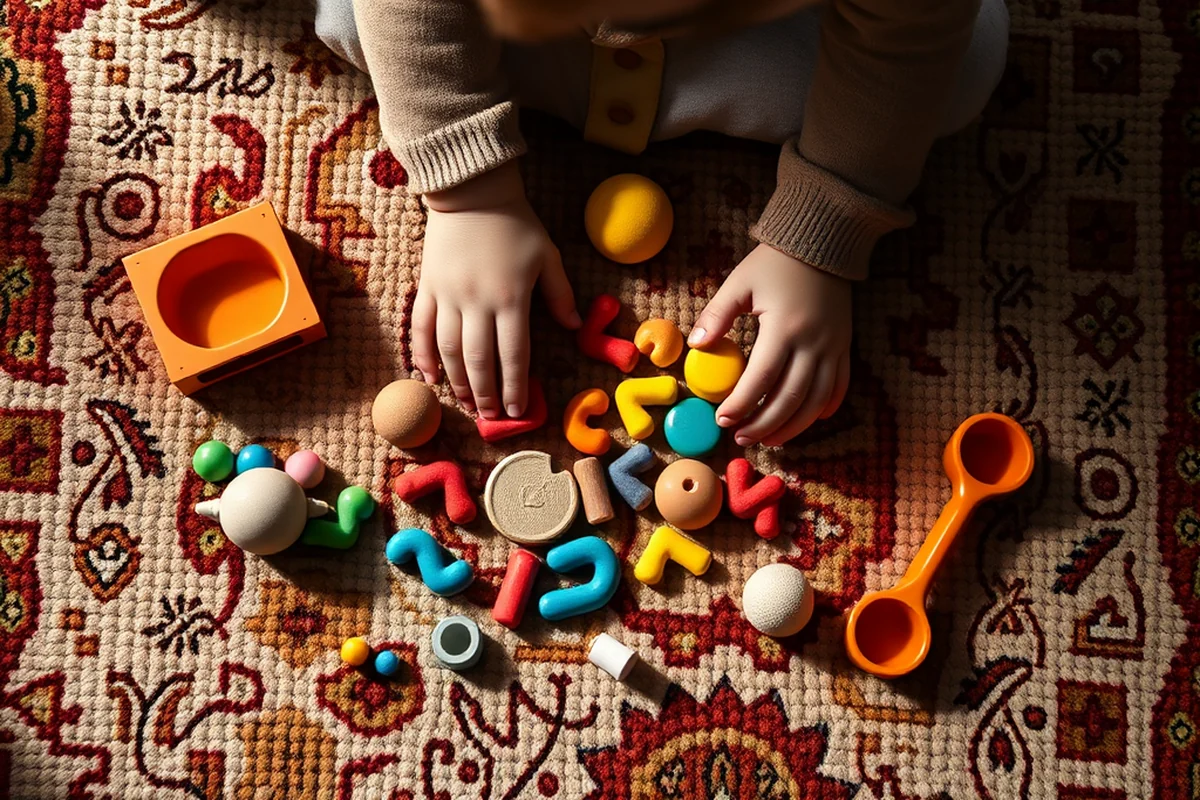
Using natural materials is one of the best sensory play budget ideas I’ve found. Whether it’s a walk in the park with a small bucket of sand, or collecting leaves and sticks for a tactile activity, nature provides a wealth of sensory experiences without any cost.
I remember taking my son on a hike and collecting different types of leaves and sticks. We used them to create a small sensory bin at home, and he loved running his fingers over the rough bark and smooth leaves. It was a simple, yet incredibly engaging way to explore the world around us.
Natural materials are not only cost-effective, but they also offer a unique, authentic experience that can’t be replicated with store-bought sensory toys. Plus, they’re often free if you take the time to look around.
The Joy of Homemade Playdough
Homemade playdough is one of the best sensory play budget ideas for families who want to explore tactile experiences without the cost of store-bought products. It’s easy to make with just a few simple ingredients, and you can customize the color, texture, and even scent to suit your child’s preferences.
I made a basic playdough recipe using flour, salt, and water, and it turned out to be a huge hit with my son. He loved the way it felt in his hands and even started adding small toys to it to create little scenes. It was a great way to keep him entertained for hours.
Homemade playdough is not only more affordable than commercial versions, but it’s also more customizable and safe. You can make it without preservatives or synthetic ingredients, and it’s a fun activity that you can do with your child.
🧘 Gentle Sensory Play
Perfect for sensitive or overstimulated children, using soft, calming materials and a quiet, safe environment.
🚀 Fast-Track Sensory Play
Quick, easy, and ready in minutes with pre-made bins or store-bought kits for on-the-go fun.
✈️ Travel/away-from-home Sensory Play
Compact, portable, and safe — perfect for keeping kids engaged during car rides or at Grandma’s house.
👶 Multiples Sensory Play
Ideal for families with more than one child — activities that can be shared and enjoyed together.
🌀 Regression Reset Sensory Play
Designed to help kids who are going through developmental or emotional regression — offering a safe, comforting space for exploration.
| The mistake | Why it happens | The fix |
|---|---|---|
| Using small objects that could be a choking hazard. | Small items like beads or pieces of fabric can be dangerous for young children. | Opt for larger, safer materials and always supervise your child during play. |
| Not considering your child’s sensory preferences. | Every child has different sensory needs and may be overstimulated by certain textures or sounds. | Start with simple, gentle materials and observe your child’s reactions to find what works best for them. |
| Not cleaning up properly after sensory play. | Mess can be hard to manage and may discourage future play sessions. | Use a bin with a lid to keep everything contained and clean up promptly after each session. |
| Using materials that are not safe for children. | Some household items, like certain plastics or chemicals, can be harmful if ingested. | Always choose non-toxic, child-safe materials and avoid anything that could be a choking or poisoning risk. |
Best Sensory Play Budget Ideas
Common Questions
Can I use household items for sensory play?
How do I make sure sensory play is safe for my child?
What are the benefits of sensory play for my child?
How long should my child play with sensory materials each day?
References
- The Powerful Role of Play in Early Education (cde.ca.gov)
- first class pre-k guidelines 2024-2025 - children.alabama.gov (children.alabama.gov)
- An approach to advance young children's holistic development - ERIC (files.eric.ed.gov)
Cite this guide
PlayMessy (2026). Best Sensory Play Budget Ideas. https://playmessy.com/best-sensory-play-budget-ideas/
Feel free to cite or share this guide.