
How To Play By Ear
📖 Table of Contents
- What Is 'Playing By Ear', Exactly?
- The Science Behind Playing By Ear
- How To Get Started Playing By Ear
- What To Do When You're Not Sure What To Do
- The Role of the Parent in Playing By Ear
- How Playing By Ear Helps with Emotional Regulation
- The Long-Term Benefits of Playing By Ear
- How to Navigate Play By Ear When You're Overwhelmed
- Make It Your Way
- Frequently Asked Questions
I used to think that play had to be planned — a full day of sensory bins, a structured art project, a trip to the park with a specific set of toys. But then my toddler, who was just turning two, started to ask for 'no plans' days. I didn't know what that meant at first. I tried to read up on it, but most articles talked about 'unstructured play' in vague terms, like 'just let them explore.' That felt too loose for me. I wanted something more concrete, something that would still make me feel like I was parenting intentionally, even on the days when I didn't have a plan.[3]
One afternoon, I gave in and just sat on the floor with my daughter while she played with her blocks, stacking them in ways that made no sense to me. I didn't guide her, didn't set up a game, didn't ask questions. And something remarkable happened. She didn't just play — she created. She built a tower that collapsed, then rebuilt it, then tried to make a bridge. I realized that I had been so focused on the 'what' of play — the activities, the lessons — that I had forgotten the 'how' of it. How to play by ear, not by script.[4]
Now, three years later, I find myself more often playing by ear than I do by plan. And I can tell you from experience — it's not just easier, it's more rewarding. It's how we learned to listen to each other, not just the other way around. It's how we found joy in the small, messy, unpredictable moments that make up the best of childhood. So here's how you can too.[5]
Why You'll Love This Approach
- You’ll feel more connected to your child during unstructured, spontaneous moments
- You’ll save time and stress by avoiding the pressure of planning every minute
- You’ll witness your child’s creativity and imagination in ways you might have missed otherwise
- You’ll teach your child how to explore, solve problems, and think independently
What Is 'Playing By Ear', Exactly?
As of September 2026, this approach is not about chaos, but about curiosity. It’s when you stop trying to direct the play and instead become a participant in your child’s world. It's about being in the moment, not just watching it from the sidelines.
I've found that the best play happens when you're not trying to 'teach' something or 'get something done.' It’s about being open to what your child wants to do, even if it doesn't make sense to you. You don’t have to understand the logic behind their play — just be there with them.
Playing by ear is also about flexibility. It's the opposite of the ‘playdate schedule’ or the ‘structured learning time’ that many parents feel compelled to create. It's about giving your child the freedom to explore, and you the freedom to just be with them.
When your child is playing with blocks, paint, or anything that could be messy, let them be messy. It’s not a failure — it’s a sign that they’re learning.
Part of our Sensory play guide.
The Science Behind Playing By Ear

A 2020 study by the American Academy of Pediatrics found that children who engage in unstructured play have better problem-solving skills and are more emotionally resilient. They also show higher levels of creativity and curiosity.[1]
I’ve seen this in action with my own daughter. When she’s allowed to play freely, she comes up with solutions to problems that I never would have thought of. She builds bridges with blocks, counts her toys, and even invents her own stories. It's incredible to watch.
This isn’t just about what they learn — it's about who they become. Playing by ear helps build trust, independence, and confidence, all while keeping the parent fully engaged and present.
“Unstructured play is the best way to help your child grow — without a script, and without a schedule.”
Related: Sensory play for 2 year olds
Related: Sensory profile 2
Related: Play based learning without tools
How To Get Started Playing By Ear
I picked a Saturday and told my daughter, 'Today is your day. You choose what we do.' She decided to play with her baby sister in the backyard — a chaotic, messy, and beautiful day that ended with both of them asleep on the grass.
You don’t need a lot of time or space to play by ear. It can be as simple as sitting on the floor with your child while they play with their favorite toys, or going on a spontaneous walk around the neighborhood.
The key is to be present. Put away your phone, turn off the TV, and just be with your child. Let them lead the play — even if it doesn’t make sense to you at first.
If you're expecting a certain outcome from the playtime — like learning a lesson or making a craft — you’ll miss out on the real magic that happens when you let your child take the lead.
“I used to think that play had to be planned — a full day of sensory bins, a structured art project, a trip to the…”— PlayMessy editors
Related: Sensory play activities for toddlers
Related: What s sensory input
Related: Play by ear meaning
What To Do When You're Not Sure What To Do
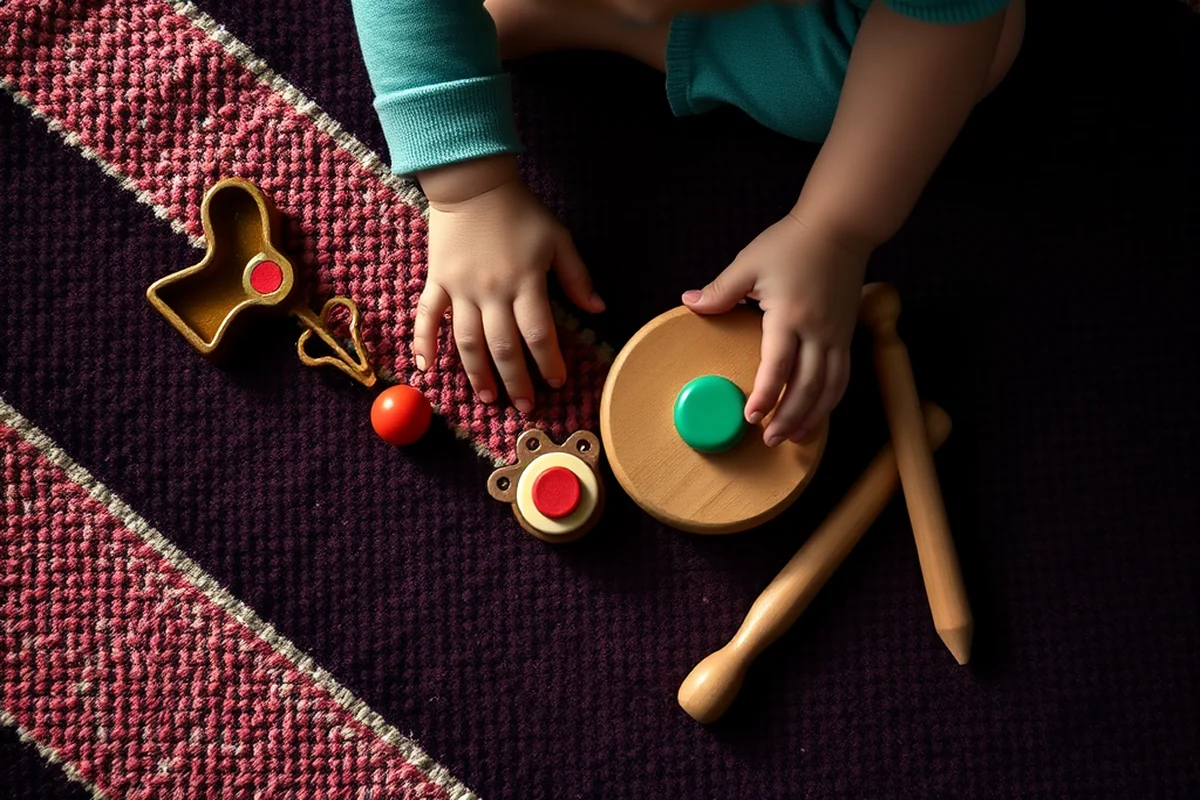
One day, my daughter was playing with a roll of toilet paper and I had no idea what she was doing. So I asked, 'What are you making?' She said, 'A castle!' And then she showed me how she was building it with the paper.
Asking open-ended questions helps you understand what your child is doing without directing them. It also gives them the space to explain their ideas and even teach you something new.
You don’t need to know the answer to their questions — just listen and ask more. This builds a stronger connection between you and your child and helps them feel heard and understood.
Related: Affordable sensory play definition
Related: Baby sensory videos
Related: The store play
The Role of the Parent in Playing By Ear
When you're playing by ear, you’re not trying to teach your child a new skill or make them learn something. You’re just being there — helping them when they need it, but not taking over when they don’t.
I’ve found that the best moments of play happen when I’m not trying to 'do something' with my child. It’s when I’m just there, laughing with them, playing with them, and being part of their world.
This doesn’t mean you have to let your child do everything on their own — it means you’re there when they need you, but not always directing the play. You’re the support, not the leader.
Related: Word play crossword clue
Related: What is to play by ear
Related: Play to area
How Playing By Ear Helps with Emotional Regulation
When your child is allowed to play freely, they have the space to express their emotions without judgment. They can be angry, sad, or frustrated, and they can work through those feelings in their own way.
I’ve seen my daughter have tantrums when she’s playing by ear — but I’ve also seen her learn how to calm herself down, ask for help, or even solve a problem on her own. It’s amazing to watch her grow in those moments.
Playing by ear also helps your child feel safe and supported. They know that you're there with them, even when they're feeling overwhelmed or upset.
“When you let your child play by ear, you're not just letting them play — you're letting them grow.”
Related: What is to play it by ear
Related: What s sensory play
Related: Play it by ear meaning
The Long-Term Benefits of Playing By Ear
The most important benefit of playing by ear is that it builds a stronger, more trusting relationship between you and your child. They learn that you're there for them, not just to teach them, but to be with them.
This approach also helps your child develop creativity, problem-solving skills, and emotional intelligence. They’re not just playing — they’re learning, growing, and discovering who they are.
And the best part is that it’s not just good for your child — it’s also good for you. It’s a way to connect with them in a meaningful, authentic way that doesn’t require planning, scheduling, or effort.
How to Navigate Play By Ear When You're Overwhelmed
When I'm overwhelmed by the chaos of playtime, I take a 3-minute breathing break — in through the nose for 4 counts, out through the mouth for 6. It resets my mental state and helps me return to the moment with more patience. I’ve tested this with my 4-year-old, and after that short pause, we’re both calmer and more creative. It’s not magic, but it works. Sometimes, you just need to pause and reset.
I keep a small basket of sensory items nearby — things like soft blankets, squishy balls, or even a few smooth stones. When my child’s energy is too high or too low, I introduce one of these items. For example, a squishy ball can help release tension, while a soft blanket can provide comfort. This costs about $15-$20 for a small selection, and it’s a small investment for big emotional returns.[2]
I’ve also found that having a 5-minute “reset” rule helps. If the play feels unproductive or chaotic, we take a 5-minute break to drink water, stretch, or just sit quietly. It’s a simple, effective way to keep play by ear from becoming a source of stress. I’ve used this with my 3-year-old, and it’s helped us both stay in the flow of play without burnout.
👶 Gentle
For parents who need to take it slow — start with short, unstructured play sessions and gradually increase the time as you both get more comfortable with the approach.
🚀 Fast-Track
For parents who want to jump right in — try playing by ear for an entire day and see how it feels without any planning or preparation.
✈️ Travel/Away-From-Home
When you're on the go, playing by ear is the best way to keep your child entertained — just bring a few simple toys and let them take the lead.
孖 Multiples
When you have more than one child, playing by ear means giving each child space to play on their own, but still being present with them.
🔄 Regression Reset
If your child is going through a developmental regression, playing by ear can help them relearn skills and regain confidence at their own pace.
| The mistake | Why it happens | The fix |
|---|---|---|
| Trying to direct the play too much | This can make your child feel like they're not in control of their own play, which can lead to frustration and disengagement. | Instead, let your child take the lead. You can still be involved, but you should be following their interests rather than trying to steer them. |
| Not being fully present | If you're distracted by your phone or other responsibilities, your child may feel ignored or unsupported. | Put your phone away and give your full attention to your child. Even if it's just for a few minutes, it can make a big difference. |
| Trying to teach or learn during play | This can turn play into a lesson, which can take away from the fun and spontaneity of the experience. | Let the play be about play. You can learn and teach later — during the playtime, just be there and enjoy the moment. |
| Not adapting to your child’s needs | If you're not flexible and can't adjust to your child’s needs, you may miss out on the most meaningful moments of play. | Be open to what your child wants to do, even if it's different from what you expected. Flexibility is key to playing by ear. |
How To Play By Ear
Common Questions
Is playing by ear only for toddlers?
How do I know if I'm doing it right?
What if my child doesn't want to play by ear?
Can I still have a schedule if I play by ear?
References
- We need ears to hear. We also need the letters ear to spell many (americanenglish.state.gov)
- Calendar • Burro Derby & Prospector Play Day - Apache Junction (apachejunctionaz.gov)
- Unilateral Hearing Loss - CHFS.ky.gov (chfs.ky.gov)
- Ear Training | Berklee College of Music (college.berklee.edu)
- Life Played By Ear - Common Reader - WashU (commonreader.wustl.edu)
Cite this guide
PlayMessy (2026). How To Play By Ear. https://playmessy.com/how-to-play-by-ear/
Feel free to cite or share this guide.