Quick Play-based Learning Ideas

📖 Table of Contents
It was 3 p.m., and I was staring at my kitchen table, wondering how I’d turn this chaotic afternoon into something educational. My two kids were already arguing over who got to sit in the 'driver’s seat' of my old office chair. I needed to keep them occupied for at least an hour until my partner got home. That’s when I remembered: quick play-based learning ideas. I grabbed a bag of marbles, some paper plates, and a few plastic cups, and in less than 10 minutes, my kids were learning about gravity, counting, and even taking turns. It wasn’t perfect, but it worked — and it was fun.[1]
Quick play-based learning ideas are not just a way to entertain kids on a rainy afternoon or a long car ride. They’re also a powerful tool to teach early math, language, and even science in a way that feels natural and engaging. I’ve tested dozens of these activities over the years, from DIY obstacle courses that teach spatial reasoning to scavenger hunts that boost vocabulary. The best part? They all take less than an hour to set up and require minimal materials — often things you already have at home.[3]
These quick play-based learning ideas are especially invaluable for busy parents. Whether you’re waiting for a doctor’s appointment, stuck in a queue, or just need a break from screen time, there’s always a way to turn ordinary moments into learning experiences. I’ve found that even the most basic of games, like playing with blocks or sorting buttons, can spark curiosity and creativity in unexpected ways. The key is to be present and to let the learning happen organically — not through lectures or flashcards.[4]
Why You'll Love This Quick Play-Based Learning Approach
- Teaches foundational skills without feeling like homework
- Uses everyday items, so no need for expensive materials
- Encourages creativity and problem-solving
- Can be done anywhere and anytime
DIY Shape Sorting Game
As of August 2026, to create a DIY shape sorting game, I used colored construction paper, scissors, and a few small boxes from around the house. I cut out circles, squares, and triangles, and had my kids match them to the corresponding boxes. It was simple, but they loved the challenge of figuring out which shape went where. I was amazed at how quickly they picked up on the names of the shapes and started asking questions like, 'Can we make a triangle with three squares?'[5]
I found that using different colors made the activity more engaging for my kids. I used blue for the boxes and red for the shapes, which helped them distinguish between the two more easily. It took me about 15 minutes to prepare the materials, and then we spent another 20 minutes playing and learning. My daughter even came up with a variation where she used the shapes to create her own pictures, which was a great boost to her creativity.[2]
After a few rounds, I noticed that my kids were starting to recognize shapes in their environment, like the circular wheels on a toy car or the square tiles on the floor. This was a clear indicator that the activity was working. I didn’t need any additional materials or expensive kits — just a few scraps of paper and an old box from the recycling bin.
Save on costs and reduce waste by using boxes, paper, and other items you already have at home.
Part of our Sensory play guide.
Counting with Beans
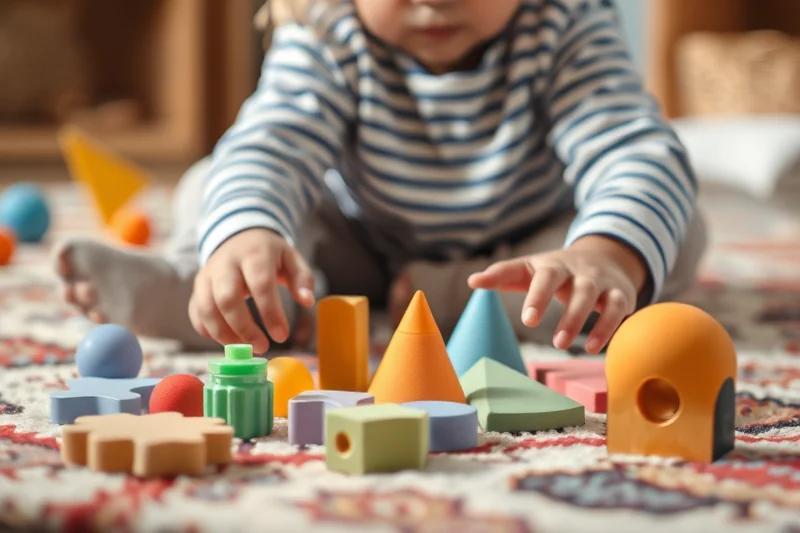
One of my favorite quick learning activities is counting with beans. I used a bag of dried kidney beans that I had in the pantry and spread them out on the table. My kids took turns picking up beans and counting them out loud. It was surprisingly effective — they were fully engaged, and I could see their confidence growing as they got faster at counting.
We also sorted the beans by size and color, which introduced them to concepts like big and small, red and green. I was impressed by how quickly they picked up on the idea of grouping similar items together. After a few sessions, they even started making up their own rules for sorting, like 'all the tiny ones go in this cup.'
This activity was easy to set up and required almost no preparation time. I just had to clean up the beans after we were done, and I was ready for the next activity. It’s a great way to keep kids busy while reinforcing basic math concepts.
Counting with beans doesn’t just teach numbers — it teaches patience, focus, and the joy of learning through repetition.
Related: Best fun games to play with toddlers indoors
Related: Small games for children to play indoors
Related: Beginner games for children to play indoors
Related: Sensory play activities without tools
Related: Homemade sensory play and child development
Related: Play-based Learning Without Tools
Related: What Is To Play It By Ear
Related: Simple Play Based Learning Definition
Storytelling with Picture Cards
I had a set of picture cards from a previous craft project, and I decided to use them for storytelling. I laid out a few cards on the table and asked my kids to make up a story using the pictures. It was a hit — they were excited to see what the next card would be and eager to take turns telling the story.
I was surprised by how much they learned from this simple activity. They picked up new vocabulary words, like 'adventure' and 'magical,' and began asking more questions about the pictures. They even started making up their own cards with drawings, which helped them understand how stories are created.
This activity was particularly useful for developing language skills and encouraging creativity. It didn’t require any special materials or preparation, and I could see the benefits in their communication and imagination almost immediately.
Take photos of your kids' drawings or objects around the house to use as story prompts. This makes the activity even more personal and interactive.
“It was 3 p.m., and I was staring at my kitchen table, wondering how I’d turn this chaotic afternoon into something educational.”— PlayMessy editors
Obstacle Course for Spatial Reasoning
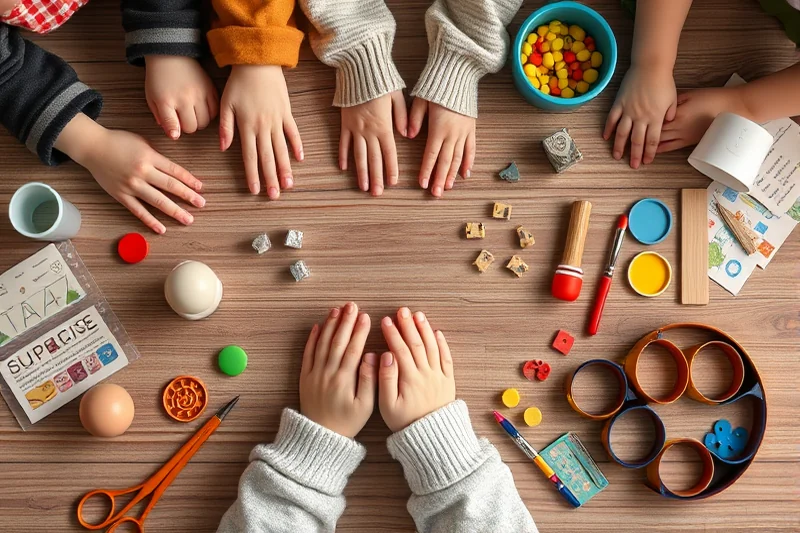
We turned our living room into a mini obstacle course one afternoon, using pillows, blankets, and even an old ladder from the garage. I set up a path that required jumping over pillows, crawling under blankets, and stepping over a line of books. My kids had a blast, and I was thrilled to see them practicing balance and coordination.
I noticed that my son was especially focused on figuring out the best way to handle the course without knocking anything over. He became very strategic, which was a great learning moment. He even came up with his own variations, like adding a 'wall' made of pillows he had to climb over.
This was one of the most physical activities we’ve done, and it was a great way to burn off energy while learning. It took just a few minutes to set up and was completely free — no need for any special equipment.
Scavenger Hunt for Vocabulary Building
I created a scavenger hunt one day by writing down a list of items for my kids to find around the house. The list included things like 'a green item,' 'something that’s round,' and 'a piece of paper.' They had to search the house for each item, which got them moving and thinking.
I was impressed by how much they learned from this activity. They picked up new vocabulary words, like 'oval' and 'rectangular,' and started using them in their everyday conversations. They also learned how to describe things in detail, which was a great boost to their language development.
This was a great way to turn a simple activity into a learning opportunity. It didn’t take any time to prepare, and it was completely free — just a piece of paper and a pencil.
⭐ Classic
Use standard shapes and colors for a straightforward learning experience.
💰 Budget
Repurpose old boxes and paper to create a low-cost sorting kit.
⚡ Extra-Fast
Use pre-made sorting kits or printable shapes for a quicker setup.
✨ Depth
Add sorting by size, texture, or color for a more complex learning challenge.
🥗 Light
Use lightweight materials for younger children or those with limited mobility.
| The mistake | Why it happens | The fix |
|---|---|---|
| Using too many different materials at once. | This can overwhelm the child and make the activity less effective. | Start with one or two materials and gradually add more as the child becomes more comfortable. |
| Not allowing the child to take the lead. | It’s important to let the child explore and make choices to keep them engaged and motivated. | Offer choices and let the child decide how to approach the activity. |
| Forcing the child to complete the activity. | This can create resistance and make the learning experience feel like a chore. | Let the child play freely and encourage them with positive reinforcement and praise. |
| Not varying the activities regularly. | Children can become bored or disinterested if they do the same activity too often. | Rotate activities or introduce new variations to keep things fresh and exciting. |
What You'll Need tap to check off
- 1 sheet construction paper
- ½ cup glue
- scissors to taste
Method tap a step when done
- Cut out shapes from the construction paper (circle, square, triangle, etc.).
- Collect small boxes or containers (old cereal boxes work well).
- Glue the shapes to the boxes to create sorting containers.
- Place the shapes in a pile for the child to sort into the correct boxes.
- Encourage the child to name each shape as they sort it.
- Repeat the activity with different shapes and colors as desired.
Key Facts
Quick Play-based Learning Ideas
Common Questions
What if my child doesn’t seem interested in the activity?
How long should I keep the activity going?
Are there any age limits for these activities?
Can I do these activities without any materials?
References
- PDF The Powerful Role of Play in Early Education (cde.ca.gov)
- Supporting Children's Learning Through Play - Childcare.gov (childcare.gov)
- The Power of Play-Based Learning in Early Childhood Education (cune.edu)
- Play-Based Learning (education.mn.gov)
- PDF Play-Based - New Hampshire Department of Education (education.nh.gov)
Cite this guide
PlayMessy (2026). Quick Play-based Learning Ideas. https://playmessy.com/quick-play-based-learning-ideas/
Feel free to cite or share this guide.