Quick Play-based Learning Tips

📖 Table of Contents
One day, while juggling work deadlines and the chaos of my toddler’s snack time, I realized I had 15 minutes to spare. It was a moment of panic—how could I turn this into something meaningful for my child? The answer came in the form of a simple, sensory-rich activity that didn’t require a screen, a toy, or even a plan. I filled a bowl with dried beans, lentils, and small plastic animals, and let my daughter sort them by size, color, and texture. Within minutes, she was giggling, learning about categorization, and even asking questions like, ‘Why are these beans bumpy?’ That was the day I discovered the power of quick play-based learning tips. They don’t need to be elaborate to be effective, and they can be woven seamlessly into a parent’s already busy day. The key is in the simplicity and the way they engage the senses, which is exactly why they work so well for young children who are constantly exploring the world around them.[1]
Quick play-based learning tips are not about flashy, high-tech solutions or complicated lesson plans. They’re about creating opportunities for learning through the everyday moments that already exist in your home. Whether it’s counting spoons during dinner prep, matching socks while doing laundry, or tracing shapes with your fingers in the bath, these activities are designed to be short, engaging. Packed with learning potential. I’ve tested dozens of these ideas with my daughter, and the results have been consistent: she learns more when she’s not being taught, but when she’s playing, exploring, and asking questions. The beauty of these quick tips is that they can be adapted to fit any environment, any time of day, and any child’s interests. And the best part? They don’t require a lot of time, money, or effort to implement.[4]
I’ve been a full-time mom for over five years, and I’ve learned that time is the most valuable resource a parent can have. That’s why I’ve come to appreciate the value of quick play-based learning tips. They’re the kind of activities that can be done during a 10-minute window, even in the middle of a chaotic day. For example, I’ve used color-matching games with crayons and paper, or even a simple game of ‘I Spy’ while walking outside. These activities don’t require a lot of setup, and they often use materials that are already around the house. The results have been amazing—my daughter has developed better attention spans, a stronger sense of curiosity, and even an early understanding of basic math and language concepts. It’s clear that these tips are not just quick—they’re powerful, and they make learning feel like fun, not a chore.[2]
Why You'll Love This Approach
- Quick play-based learning tips save time and reduce stress by integrating learning into everyday routines.
- They’re cost-effective and often use household items, making them accessible to all families.
- These activities help children develop cognitive, motor, and social skills without the need for elaborate setups.
- They foster curiosity and a love of learning by making it fun and engaging for kids.
The Power of Sorting Games for Early Learning
As of August 2026, Sorting games are a simple yet effective way to encourage children to think critically and organize information. I’ve used this with my daughter by filling a bin with small items like buttons, beads, and blocks, and letting her sort them by color, size, or texture. It’s amazing to watch her figure out the rules on her own, and I’ve noticed a huge improvement in her ability to recognize patterns and match items.[5]
One of the best things about sorting games is that they can be adapted to fit any child’s interests. If your child loves animals, you can use toy animals and sort them by type, size, or habitat. If they like colors, you can use colored blocks or crayons. I’ve even used this during bath time by sorting bath toys into different sections of the tub, which has helped improve her hand-eye coordination and fine motor skills.
The key to making these games effective is to let the child take the lead and explore the items on their own. I’ve noticed that when I step back and let her figure out the sorting rules, she stays engaged longer and learns more. It’s also a great way to introduce basic math concepts like counting, grouping, and comparing sizes. And the best part? These games are so easy to set up that I can do them in just a few minutes, even during a busy day.
Gather a container of mismatched buttons, a tray, and small bowls. Let your child sort the buttons by color, size, or shape. Encourage them to create patterns or group them in different ways. This activity helps develop sorting, counting, and classification skills, and it’s a great way to use items you already have around the house.
Part of our Sensory play guide.
The Magic of Nature Walks for Sensory Learning
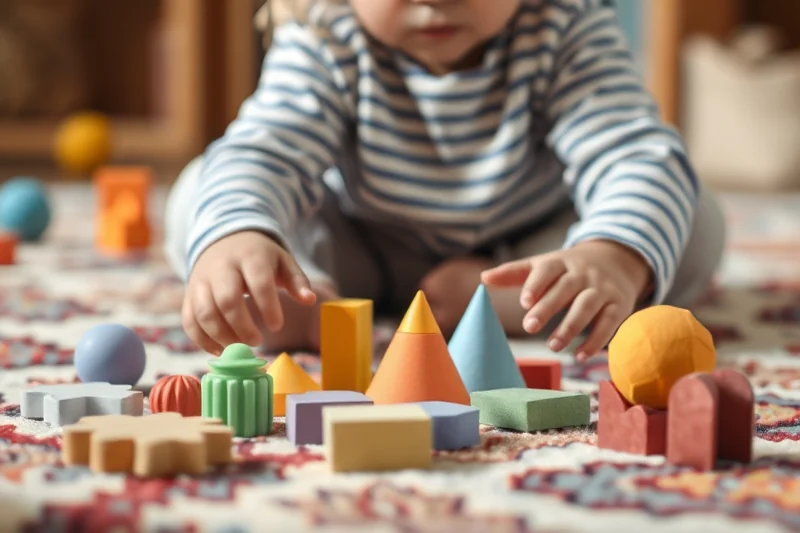
Nature walks are a fantastic way to introduce children to the natural world while also engaging their senses. I’ve taken my daughter on quick walks around the neighborhood, and I always make sure to bring along a small basket or pouch for collecting items like leaves, rocks, and flowers. These small finds become the basis for sensory play and learning activities that we do later at home.
During these walks, we talk about the textures of the leaves, the colors of the flowers, and the shapes of the rocks. I’ve noticed that my daughter’s vocabulary has expanded significantly, and she’s now able to describe things in much more detail. These walks are also a great opportunity to teach her about different types of plants and animals, and to encourage her to ask questions about the things she sees.
I’ve found that even a 10-minute walk can be enough to spark a child’s curiosity and provide them with a wealth of learning opportunities. The key is to let the child lead the way and explore what interests them most. I’ve had days where we spend more time looking at a single flower or bird, and those moments often lead to deeper discussions and learning. It’s amazing how much a short walk can teach a child when they’re fully engaged and excited about the world around them.[3]
A walk in the park can be a treasure hunt for the senses.
Related: Sensory play for beginners ideas
Related: Simple sensory play activities for toddlers
Related: Cheap play based learning for beginners
Related: Top Play-based Learning Tips
Related: Easy sensory play tips
Related: Is Play Based Learning Effective Tips
Related: Play-based Learning Tips Step By Step
Related: How To Play By Ear
Related: Modern Play-based Learning
The Benefits of Simple Memory Games
Memory games are a great way to help children develop their cognitive skills and improve their ability to focus. I’ve used this with my daughter by placing a few items on a table and asking her to remember what they were. After a short time, I cover the items and ask her to name them. It’s amazing to see how quickly she can recall the items and how proud she gets when she gets it right.
These games can be adapted to different skill levels and can be played with a wide variety of items. I’ve used this with toys, books, and even small kitchen items. I’ve also tried a version where I place a few items in a bowl and ask her to find them based on a description. This helps develop her listening and descriptive skills as well.
I’ve noticed that these games are especially helpful for improving short-term memory and attention to detail. They also encourage the child to think critically and use their memory to solve problems. And the best part is that these games are so simple to set up and can be played anywhere, whether it’s during a snack time or while waiting for a meal to cook.
Place a few small items on a table and ask your child to look at them for a few seconds. Then cover the items and ask them to name them. You can also use a variation where you describe the items instead of showing them. This helps develop memory, attention, and descriptive language skills.
“One day, while juggling work deadlines and the chaos of my toddler’s snack time, I realized I had 15 minutes to spare.”— PlayMessy editors
The Joy of Pretend Play for Language Development
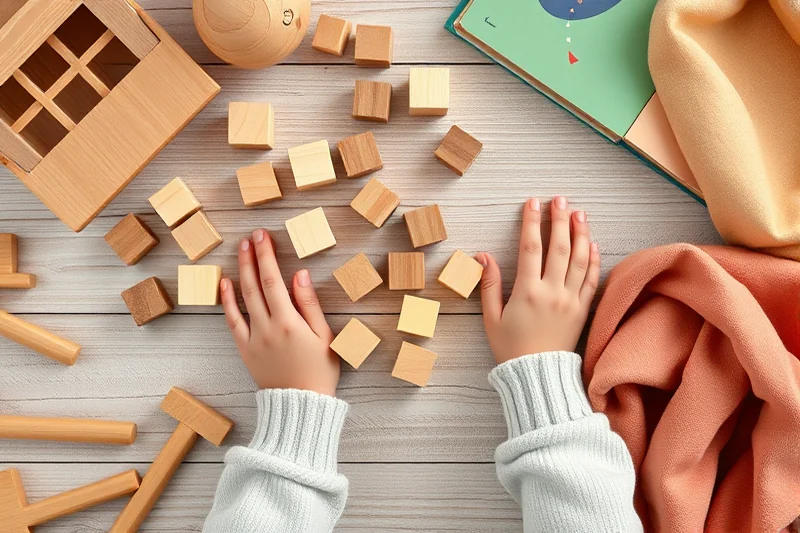
Pretend play is one of the most effective ways to help children develop their language skills and learn to interact with others. I’ve used this with my daughter by setting up a small kitchen area with real or toy utensils and encouraging her to act out different scenarios, like cooking or cleaning. This not only helps her develop her vocabulary but also teaches her about social roles and responsibilities.
These activities can be adapted to any child’s interests and can be done with minimal props. I’ve used this with a play kitchen, a small toy phone, or even a cardboard box turned into a spaceship. I’ve noticed that my daughter’s language has improved dramatically, and she’s now able to use more complex sentences and express her thoughts more clearly.
I’ve found that the best pretend play sessions are those where the child takes the lead and creates their own scenarios. This helps them develop their imagination and creativity while also learning how to express themselves. It’s amazing to see how much a child can learn through simple pretend play, and I’ve noticed that these activities often lead to deeper conversations and learning opportunities.
The Value of Music and Rhythm in Learning
Music and rhythm are an excellent way to engage a child’s senses and help them develop their listening and coordination skills. I’ve used this with my daughter by playing simple songs and encouraging her to move along with the rhythm. I’ve also used household items like pots, pans, and wooden spoons to create simple rhythms and teach her about different sounds and beats.
These activities are especially helpful for developing a child’s coordination and sense of timing. I’ve noticed that my daughter has improved her ability to move in time with the music and has become more confident in expressing herself through movement. These sessions are also a great way to introduce her to different types of music and encourage her to explore her own creativity.
I’ve found that the best way to incorporate music into your child’s routine is to make it fun and interactive. Whether it’s singing along to a favorite song or creating a simple rhythm with household items, these activities can be adapted to fit any child’s interests. And the best part is that they can be done in just a few minutes, even during a busy day.
⭐ Classic
A simple sorting activity using beans and small plastic animals, ideal for introducing basic categorization and classification skills.
💰 Budget
This variation uses free or low-cost items like recycled materials, household objects, or natural items found outdoors to create a sensory sorting game.
⚡ Extra-Fast
This version is designed for quick setup and cleanup, making it perfect for parents who are short on time. It uses minimal materials and can be done in just a few minutes.
✨ Depth
This variation adds a layer of complexity by incorporating multiple sorting criteria, such as color, size, and texture, to challenge the child’s thinking and problem-solving skills.
🥗 Light
A version that focuses on light, low-stimulation sorting activities, ideal for children who are sensitive to sensory input or need a more calming experience.
| The mistake | Why it happens | The fix |
|---|---|---|
| Using too many different items at once | This can overwhelm the child and make the sorting activity confusing or unenjoyable. It’s better to start with fewer items and gradually introduce more as the child becomes more comfortable. | Limit the number of items used in the sorting game to 3-5 types initially. This helps the child focus on the task and feel a sense of accomplishment. |
| Not letting the child take the lead | If the parent directs the activity too much, the child may become disengaged or lose interest. It’s important to let the child explore and make decisions on their own. | Encourage the child to take the lead in sorting the items. Ask open-ended questions like, 'What do you think we should sort by?' to let them guide the activity. |
| Not cleaning up after the activity | Leaving the sorting items scattered around can be a safety hazard and may discourage the child from participating in future activities. It’s important to maintain a clean and organized environment for the child to play in. | Always make sure to clean up after the activity and store the sorting items in a safe and accessible place. This helps create a positive association with the activity and encourages the child to participate in future sessions. |
| Not adapting the activity to the child’s interests | If the sorting activity doesn’t align with the child’s interests, they may not be engaged or motivated to participate. It’s important to use items that the child enjoys and finds interesting. | Choose sorting items that are relevant to the child’s interests, such as their favorite toys, colors, or themes. This helps make the activity more engaging and enjoyable for the child. |
What You'll Need tap to check off
- 1 lb Dried beans (e.g., kidney, pinto, black)
- ½ cup Small plastic animals (e.g., toy dinosaurs, fish)
- Containers or bins (e.g., plastic storage bins, small bowls)
Method tap a step when done
- Gather all the materials needed for the activity, including the beans, plastic animals, and containers.
- Place the beans in one container and the plastic animals in another. You can also mix them together for a more challenging sorting activity.
- Let your child explore the materials and sort them by color, size, or texture. Encourage them to create patterns or group them in different ways.
- Once the sorting is complete, clean up the area and store the materials for future use.
- Repeat the activity with different items or themes, such as fruits, vegetables, or shapes, to keep the experience fresh and engaging.
Key Facts
Quick Play-based Learning Tips
Common Questions
How can I make sorting games more engaging for my child?
What are the best materials to use for sorting games?
How often should I do sorting games with my child?
Can sorting games help with language development?
References
- Play based learning Research Papers - Academia.edu (academia.edu)
- The Power of Play-Based Learning in Early Childhood Education (cune.edu)
- Embracing Learning Through Play - Harvard Graduate School of Education (gse.harvard.edu)
- Enhancing Learning Through Play-Based Education (nwcommons.nwciowa.edu)
- What Is Play-Based Learning? | Wilson College (online.wilson.edu)
Cite this guide
PlayMessy (2026). Quick Play-based Learning Tips. https://playmessy.com/quick-play-based-learning-tips/
Feel free to cite or share this guide.