
Sensory Play By Age Stage For Beginners
📖 Table of Contents
- 0-6 Months: The Awakening of the Senses
- 6-12 Months: Exploring Through Movement and Interaction
- 1-3 Years: Play That Encourages Language and Creativity
- 3-5 Years: Building Fine Motor Skills and Emotional Expression
- 5+ Years: Exploring Complex Concepts Through Sensory Play
- Make It Your Way
- Frequently Asked Questions
When my son was 8 months old, I had no idea that playing with a wet sponge was going to be a game-changer for his development. It wasn’t until I watched him repeatedly press it against his face, fascinated by the cold, squishy texture, that I realized how powerful sensory play could be. I had heard the term before, but I didn’t understand how it could be tailored to his age stage or why it mattered. That’s why I’m writing this — to help other parents understand sensory play by age stage for beginners, the way I wish I had.
Sensory play by age stage for beginners isn’t just about fun. It’s about building neural pathways, improving motor skills, and encouraging curiosity. I found that the best way to approach it was to break it down into age groups — from 0 to 12 months, 1 to 3 years, 3 to 5 years, and so on. Each stage has different needs, and I wanted to make sure I was giving my child the right kind of stimulation for where he was developmentally.[1]
It’s easy to get lost in the overwhelm of endless sensory play ideas, but the truth is, it doesn’t take a lot to make a difference. I’ve learned that simple tools like textured balls, soft cloths, and even a bowl of water can be enough to engage a baby. The key is knowing what works for each age stage, and that’s exactly what this guide is about. Whether you’re a first-time parent or just looking to boost your child’s development, I hope this helps you get started.
Why You'll Love This Sensory Play Guide
- Tailored for every age stage, making it easy to follow
- Based on real experience, not just theory
- Includes actionable tips and materials you can find at home or afford
- Helps build foundational skills in a fun, natural way
0-6 Months: The Awakening of the Senses
As of August 2026, Newborns have underdeveloped vision and limited mobility, but they are already processing the world around them. During this stage, sensory play is about simple, safe exploration. I used soft, washable fabric swatches in different textures — like velveteen, fuzzy, and smooth — to let my baby feel the differences in his hands. He would grab them with his tiny fists, and I could see his eyes lighting up when he discovered a new texture.
Another favorite was the use of rattles with contrasting colors. My son would stare for minutes at the bright patterns, and I noticed that he began tracking them with his eyes over time. I also used a small, soft toy that made gentle sounds. Even though he couldn’t reach it, he would turn his head toward the noise, which was a sign that he was developing auditory awareness.
I found that using two or three different materials was enough to keep him interested without overwhelming him. The key is to keep the items clean, safe, and easily washable, especially as he begins to explore with his mouth. I always made sure to supervise him closely during these sessions.
Try using a soft towel, a smooth plastic spoon, or a rubber bath toy — these are all safe and sensory-rich for infants.
Part of our Sensory play by age stage guide.
6-12 Months: Exploring Through Movement and Interaction

When my son turned six months old, I noticed that he was beginning to reach for things and roll over. This was the perfect time to introduce sensory play that encouraged movement. I used a large, soft ball with crinkly sounds inside. He would roll it across the floor, and the noise would motivate him to move toward it. It was amazing to see how his motor skills developed through simple play.
Another favorite was a sensory tray with baby-safe items like soft rubber balls, blocks, and a shallow container of water. He would scoop and splash, and even though I had to clean up afterward, it was worth it for the joy on his face. I also found that using a baby-safe mirror helped him learn about himself — he would reach for his reflection and smile, which was a delightful experience for both of us.
I made it a point to spend about 15 minutes a day on these activities. It didn’t take long, but the results were clear — he was more curious, more engaged, and more active than before.
Movement is the key to development — even the smallest steps matter.
Related: Sensory play stage mistakes to avoid
Related: Sensory Play Printables Checklists For Beginners
Related: Sensory play by age stage guide
Related: Sensory play by age stage step by step
Related: Best Sensory Play For Beginners
Related: Sensory Play Stage For Beginners
Related: Sensory Play By Age Stage On A Budget
Related: Sensory Play By Age Stage Tips
Related: Sensory Play By Age Stage That Actually Work
Related: Sensory Play Stage Tips
1-3 Years: Play That Encourages Language and Creativity
Around 18 months, my son began to speak more and show an interest in pretend play. This was the time to introduce sensory activities that encouraged language and creativity. I used a sensory bin filled with plastic animals, blocks, and a small bucket of water. He would dump the water out and fill the bucket, then pretend to feed the animals, which was both fun and educational.[2]
I also introduced a sensory table with different items like buttons, wooden blocks, and small plastic containers. He would sort them by color, shape, and texture, which helped his cognitive development. I noticed that his vocabulary improved significantly during this time, and he began using words like 'big,' 'small,' and 'wet' with ease.
I found that the most effective sessions were those that were short, around 20 minutes, and involved active participation. I would sit with him and ask questions like, 'What color is that?' or 'What does it feel like?' These simple conversations helped him learn new words and think more deeply about the world around him.
Engage your toddler with open-ended questions like, 'What do you think this is?' or 'What does it feel like?' to encourage language and curiosity.
“When my son was 8 months old, I had no idea that playing with a wet sponge was going to be a game-changer for his…”— PlayMessy editors
Related: Quick Sensory Play By Age Stage
3-5 Years: Building Fine Motor Skills and Emotional Expression
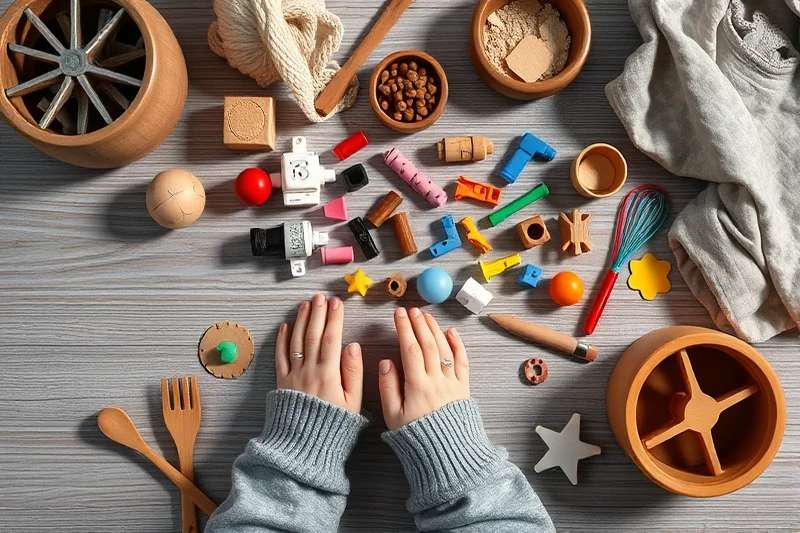
By the time my son reached three years old, he was more coordinated and expressive. I started using sensory play to help him build his fine motor skills and explore his emotions. I filled a bin with items like pasta, rice, and small wooden beads, which he could sort, count, and place into containers. This activity helped him develop his hand-eye coordination and patience.
I also introduced a sensory play dough with different textures, like scented, squishy, and even a version that changed color when squeezed. He loved the squishy dough and would spend hours kneading and shaping it. I noticed that he was more patient and focused during these sessions, which was a big win for me.
I made sure to keep the play sessions around 30 minutes to avoid overstimulation. It was also helpful to let him choose which activity he wanted to do, which gave him a sense of control and independence.
5+ Years: Exploring Complex Concepts Through Sensory Play
When my son turned five, he was ready for more advanced sensory play that encouraged problem-solving and critical thinking. I introduced activities like building with sensory blocks, using a sensory maze, and even creating a 'science' bin with items like baking soda, vinegar, and food coloring. He loved mixing the ingredients and watching the reactions, which was a great way to introduce basic chemistry concepts.
I also created a sensory play center with a variety of materials, including sand, water, and different types of fabric. He would create his own mini worlds, like a beach or a jungle, and use the materials to build and explore. This helped him develop creativity and imagination.
I found that these activities were more involved, but they were still fun and engaging. I made sure to set clear rules and limits, like no running in the play area or no eating the materials, to keep things safe and focused.
🧘 Gentle Approach
For parents who want to take things slow and focus on small, calm sensory experiences that build trust and comfort.
🚀 Fast-Track Method
For busy parents who want to fit in quick, high-impact sensory play sessions that make a difference without taking up too much time.
🧳 Travel/On-the-Go Play
For parents who need sensory play ideas that are easy to bring along, like small, portable bins or easy-to-clean items.
👶 Multiples Play
For parents with more than one child, offering sensory activities that can be shared and played with together.
🔄 Regression Reset
For parents who want to use sensory play as a reset tool during stressful or developmental regression periods.
| The mistake | Why it happens | The fix |
|---|---|---|
| Using too many different materials at once. | This can overwhelm the child and make it difficult for them to focus on any one activity. | Stick to two or three materials at a time to keep the play session simple and engaging. |
| Not cleaning up sensory play materials properly. | Sensory materials can be messy and may harbor germs if not cleaned properly. | Always clean and sanitize materials after each use, especially if the child has been using them in their mouth. |
| Forgetting to supervise the child during sensory play. | Children can sometimes put small objects in their mouths, leading to choking hazards. | Always stay within arm’s reach during sensory play and choose materials that are safe for the child’s age. |
| Using items that are not washable or non-toxic. | This can be dangerous for children, especially those under three years old who often explore through their mouths. | Only use materials that are labeled as safe for children and can be easily cleaned. |
Sensory Play By Age Stage For Beginners
Common Questions
What are the best materials for sensory play with babies under 6 months?
How long should a sensory play session last for toddlers aged 1-3 years?
What are some safe sensory play ideas for 3-5 year olds?
Can sensory play help with emotional development?
References
- The Powerful Role of Play in Early Education (cde.ca.gov)
- Developmental Stages of Social Emotional Development in Children (ncbi.nlm.nih.gov)
Cite this guide
PlayMessy (2026). Sensory Play By Age Stage For Beginners. https://playmessy.com/sensory-play-by-age-stage-for-beginners/
Feel free to cite or share this guide.