Simple Play Based Learning Definition
📖 Table of Contents
I remember the first time my daughter built a tower out of blocks, not because I asked her to, but because she was curious about how tall she could make it. That moment, unscripted and filled with concentration, was my introduction to the power of simple play-based learning. I didn’t realize it then, but that was a perfect example of learning through exploration, not through structured lessons. Simple play-based learning isn’t just a buzzword—it’s a way of life that I’ve come to value deeply in my parenting journey.[3]
Simple play-based learning is about letting kids learn by doing, not by memorizing facts from a textbook. It’s the difference between a child learning to count by rote and a child learning to count by sorting toys, arranging them in order, and discovering patterns. I’ve seen my own child develop literacy skills through reading bedtime stories, but also through playing with magnetic letters and tracing words in the air. It’s about creating an environment where learning is natural, intuitive, and fun.[4]
What I love about this approach is that it doesn’t require expensive materials or elaborate setups. It’s about being present, observing, and responding to a child’s curiosity. I’ve made it a point to keep a variety of open-ended materials at home—think cardboard boxes, fabric scraps, and natural items like sticks and stones. These aren’t just toys; they’re tools for discovery and creativity. Simple play-based learning is the kind of learning that sticks, because it’s rooted in real experiences and the joy of exploration.[5]
Why You'll Love This Approach to Learning
- Encourages natural curiosity and discovery without pressure
- Fosters creativity and problem-solving through hands-on exploration
- Builds emotional resilience and confidence through trial and error
- Strengthens the parent-child bond through shared learning experiences
What Is Simple Play-Based Learning?
As of August 2026, at its core, simple play-based learning is about allowing children to explore, experiment, and learn through their own interests and curiosity. It’s not about structured lessons or worksheets—it’s about the joy of discovery. I’ve seen my child learn about gravity by rolling balls down ramps and about shapes by stacking blocks in different ways. It’s these small, unscripted moments that form the foundation of a child’s learning.
This approach is particularly effective because it taps into how young children naturally learn. Instead of being told what to do, they’re given the freedom to explore and figure things out on their own. This not only makes learning more enjoyable but also helps children develop a sense of autonomy and self-confidence. For example, when my child first tried to tie her own shoes, I didn’t step in immediately. I let her struggle and eventually succeed on her own, which was a huge confidence boost.
Another benefit of simple play-based learning is that it’s adaptable to any family’s lifestyle and resources. You don’t need a lot of money or space to create a learning environment. A simple cardboard box can become a spaceship, a blanket can turn into a mountain, and a few sticks can be used to build a miniature village. It’s all about the imagination and the opportunities for learning that arise from everyday objects.
Look around your home for materials that can be turned into learning tools. Cardboard boxes, fabric scraps, and even kitchen items like measuring cups can be used for counting, sorting, and exploring textures and shapes.
Part of our Sensory play guide.
Why Simple Play-Based Learning Works
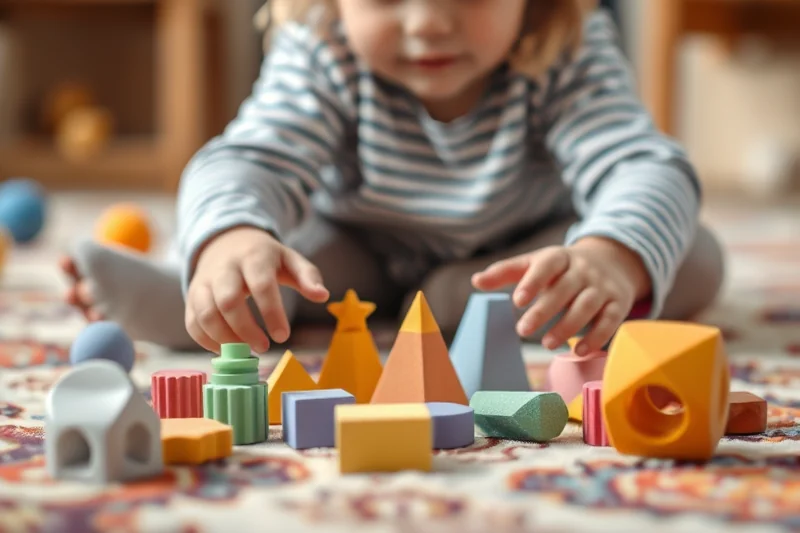
Research in early childhood education has shown that children learn best when they’re actively engaged in the learning process. Simple play-based learning allows them to do just that. Whether they’re pretending to be a chef in the kitchen or building a house out of blocks, they’re using their imagination and applying real-world skills. I’ve noticed that my child’s language development has accelerated since she started pretending to be different characters in her play.[1]
Another reason this approach works is that it allows children to learn at their own pace. There’s no pressure to perform or meet specific milestones. Instead, they’re given the freedom to explore and discover at their own speed. This makes learning a more joyful and stress-free experience. For instance, my child took longer than most to learn the alphabet. When I incorporated letter recognition into our playtime—like using magnetic letters to spell out words she knew—the process became much more natural for her.
Simple play-based learning also fosters emotional resilience. When a child makes a mistake or fails at a task, they’re given the space to try again without fear of judgment. This helps them develop a growth mindset and learn that mistakes are a natural part of the learning process. I’ve seen this in action when my daughter tried to balance a stack of blocks and knocked them down. Instead of getting frustrated, she just smiled and tried again, a testament to her growing resilience.
Learning should be a joyful journey, not a race with a finish line.
Related: Cheap sensory play
Related: Best play based learning
Related: Small play based learning benefits
Related: Budget sensory play activities
Related: Minimalist sensory play ideas
How to Get Started with Simple Play-Based Learning
The key to getting started with simple play-based learning is to create an environment that invites exploration and discovery. This doesn’t require a lot of money or preparation. In fact, the best materials are often the ones you already have at home. I’ve found that even a small space with a few open-ended toys can become a hub of learning. A few blocks, some art supplies, and a few natural items like leaves and stones are enough to spark a child’s imagination.
Another important step is to be present and engaged in your child’s play. This doesn’t mean you have to direct the play or turn it into a lesson. Instead, you can simply observe and respond to your child’s interests. For example, if your child is pretending to be a doctor, you can join in by playing along and asking questions like, “What should we do to help this patient?” This helps build a stronger connection and makes learning more meaningful.
It’s also important to allow your child to lead the way. Let them choose what they want to play with and explore. This helps them develop a sense of autonomy and decision-making skills. When my daughter wanted to build a castle with blocks, I didn’t try to change her mind or steer her toward something else. Instead, I supported her by providing extra blocks and encouraging her to experiment with different designs.
Instead of directing the play, join in and ask open-ended questions to encourage your child to think and explore. This helps them take ownership of their learning and fosters a deeper connection.
“I remember the first time my daughter built a tower out of blocks, not because I asked her to, but because she was curious about…”— PlayMessy editors
Examples of Simple Play-Based Learning in Action
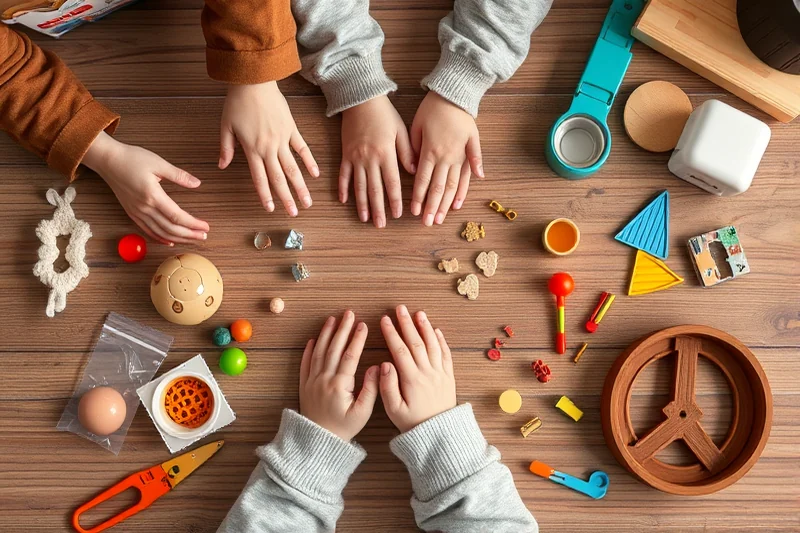
One of the best examples of simple play-based learning is when a child uses building blocks to explore concepts like balance, structure, and spatial awareness. I’ve watched my daughter experiment with different block arrangements, trying to build the tallest tower she could. Through trial and error, she learned about gravity, stability, and the importance of a strong foundation. It was a natural way for her to understand these concepts without any formal instruction.
Another example is when children use art supplies to explore colors, shapes, and textures. I’ve seen my child mix different paints to create new colors and use different brushes to explore how each one affects the outcome. These activities not only help with fine motor skills but also encourage creativity and self-expression. It’s amazing how much learning can happen through simple, hands-on play.
Simple play-based learning can also occur during cooking or baking with your child. I’ve involved my daughter in simple baking projects like making cookies or cupcakes. Not only does this teach her about measurements and following instructions, but it also helps her develop life skills like cleaning up after herself and working with others. It’s a fun and practical way to incorporate learning into everyday activities.
The Long-Term Benefits of Simple Play-Based Learning
One of the most significant long-term benefits of simple play-based learning is that it helps children develop a strong foundation for future academic success. By learning through hands-on exploration and discovery, children develop critical thinking, problem-solving, and creativity skills that are essential for learning in school. I’ve noticed that my child has a natural curiosity and love for learning, which has helped her in her schoolwork and even in her reading and math classes.
Another long-term benefit is the development of social and emotional skills. When children play with others, they learn how to share, take turns, and resolve conflicts. These are essential skills for building strong relationships and succeeding in life. I’ve seen my daughter learn these skills through group play and pretend scenarios with her friends, which has helped her become more empathetic and cooperative.
Perhaps the most important long-term benefit of simple play-based learning is the development of a love for learning. When children are allowed to explore and discover at their own pace, they develop a natural curiosity and a lifelong love of learning. I’ve seen this in my daughter, who is now eager to read, explore new concepts, and take on new challenges. It’s a beautiful thing to see, and it’s all the result of simple, unstructured play.
⭐ Classic
A basic play dough recipe with flour, salt, and baking soda for a simple and versatile sensory experience.
💰 Budget
A version of the recipe that uses only common household ingredients and avoids specialty items like food coloring.
⚡ Extra-Fast
A quicker version of the recipe with fewer ingredients and steps for parents who need a fast sensory activity.
✨ Depth
A variation that includes additional sensory elements like sand, glitter, or essential oils for a more immersive experience.
🥗 Light
A version that uses fewer calories and fats, ideal for a lighter sensory activity that’s still fun and engaging.
| The mistake | Why it happens | The fix |
|---|---|---|
| Over-directing the play | Over-directing the play can take away from the child’s autonomy and make them feel pressured or controlled. | Be a play partner and let your child lead the way. Ask open-ended questions and observe their interests without stepping in or taking over. |
| Using too many structured activities | Too many structured activities can make play feel like a chore and take away from the natural, exploratory nature of simple play-based learning. | Use open-ended materials and allow your child to explore freely. Keep the activities loose and flexible to encourage creativity and discovery. |
| Not being present or engaged | Not being present or engaged can make the child feel unsupported and disconnected from the learning process. | Be present and actively engaged in your child’s play. Ask questions, join in, and respond to their interests to create a stronger connection. |
| Focusing too much on academic skills | Focusing too much on academic skills can make play feel like a lesson and take away from the natural joy of exploration. | Allow your child to explore and discover at their own pace. Let them learn through play, not through structured lessons or academic goals. |
What You'll Need tap to check off
- 1 lb All-purpose flour
- ½ cup Salt
- ½ cup Baking soda
- ½ cup Water
- ½ cup Vegetable oil
- Food coloring (optional)
Method tap a step when done
- In a large mixing bowl, combine the flour, salt, and baking soda.
- Make a well in the center of the dry ingredients and add the water and vegetable oil.
- Mix the ingredients together until a dough forms. If the dough is too dry, add more water, one tablespoon at a time.
- Knead the dough on a floured surface for about 10 minutes until it becomes smooth and elastic.
- If desired, divide the dough into small portions and add food coloring to each portion. Knead each portion until the color is evenly distributed.
- Store the play dough in an airtight container or plastic bag to keep it from drying out.
Key Facts
Simple Play Based Learning Definition
Common Questions
How can I incorporate simple play-based learning into my daily routine?
What are some of the best materials for simple play-based learning?
How can I help my child develop a love for learning through play?
What are the long-term benefits of simple play-based learning?
References
- PDF Furthering our Understanding of Play to Promote Competencies in Head ... (acf.gov)
- PDF The Powerful Role of Play in Early Education (cde.ca.gov)
- Supporting Children's Learning Through Play - Childcare.gov (childcare.gov)
- Game-Based Learning | Center for Innovation in Teaching & Learning (citl.illinois.edu)
- The Power of Play-Based Learning in Early Childhood Education (cune.edu)
Cite this guide
PlayMessy (2026). Simple Play Based Learning Definition. https://playmessy.com/simple-play-based-learning-definition/
Feel free to cite or share this guide.