
Sensory Play And Child Development Without Tools
📖 Table of Contents
- The Power of Everyday Sensory Experiences
- How Sensory Play Supports Child Development
- The Benefits of Unstructured Sensory Play
- Incorporating Sensory Play into Your Daily Routine
- The Long-Term Impact of Sensory Play on Child Development
- Make It Your Way
- Frequently Asked Questions
- The Printable Activity Plan
I remember the first time my daughter sat cross-legged on the floor, her tiny fingers tracing the ridges of a wooden spoon while I stirred a pot of warm oatmeal. It was a simple moment, but it sparked a realization: sensory play doesn’t need expensive tools, flashy toys, or even a dedicated space. It can happen in the most ordinary parts of daily life—when you’re cooking, cleaning, or even just sitting together. This is the power of sensory play and child development without tools. It’s about creating moments that engage the senses naturally and intentionally, without the need for extra effort or cost.[2]
I began exploring this idea more deeply after noticing how my toddler’s attention span improved when we involved her in everyday tasks. When she helped me knead dough or scoop flour into a bowl, her hands were busy, her eyes were alert, and her curiosity was piqued. These weren’t structured learning activities, but they were rich with sensory input. The texture of the dough, the smell of the spices, the sound of the spoon hitting the bowl—these were all part of her growing understanding of the world. It’s not that I was teaching her to count or spell, but I was teaching her to explore, to feel, to notice.[3]
In my experience, the best sensory play doesn’t come from flash-in-the-pan toys or elaborate setups. It comes from the moments we create with our children through the simple act of being present. Whether it’s the feel of a wet sponge in their hands or the crunch of a cracker between their teeth, these moments are the building blocks of child development. And the beauty of it is that they don’t require any special tools or preparation. They just require a little intention, a lot of love, and the willingness to see the world through a child’s eyes.[4]
Why You'll Love This Approach to Sensory Play
- It's accessible—no special tools or expensive toys required.
- It's flexible—you can adapt it to any part of your day.
- It's rich in developmental benefits for motor skills, language, and emotional growth.
- It's a way to bond with your child while doing everyday tasks.
The Power of Everyday Sensory Experiences
As of August 2026, the first time I noticed the power of everyday sensory experiences was during a simple kitchen task. My daughter had just turned two, and I was making a batch of banana bread. I handed her a wooden spoon and let her stir the batter, even though it was messy. Her hands were covered in flour, and her face was smeared with the gooey batter. But her eyes were wide with excitement. She was learning about textures, smells, and even the concept of mixing. It was a moment of pure, unstructured play that didn’t require any special tools or setup.[5]
I realized that sensory play doesn’t have to be confined to specific activities or times of day. It can happen while you’re baking, cleaning, or even just sitting with your child. These moments are not only beneficial for development—they’re also deeply bonding. I noticed that my daughter was more engaged, more curious, and even more confident when she was involved in these everyday tasks.
Since then, I’ve made it a point to bring my child into these moments. Whether it’s kneading dough, sifting flour, or even just letting her dip her hands into a bowl of warm oatmeal, I’ve seen how these simple acts can become powerful learning experiences. They’re not just about play—they’re about connection, growth, and exploration.
If you don’t have a dedicated play area or sensory tools, don’t worry. Use items you already have in your home—like flour, water, or even a wooden spoon. These are all great tools for sensory play.
Part of our Sensory play guide.
How Sensory Play Supports Child Development

Research has shown that sensory play supports cognitive, emotional, and physical development in children. When a child touches a smooth surface, hears the sound of a spoon clinking against a bowl, or smells the aroma of spices, they are engaging their senses in ways that promote learning and growth. I’ve seen this in my own child as she explored different textures and smells during our kitchen time. Her language skills improved, her motor skills became more refined, and her confidence grew as she experimented with her environment.[1]
One of the most surprising benefits I’ve noticed is how sensory play has helped with my daughter’s emotional regulation. When she’s overwhelmed or frustrated, engaging her in a sensory activity—like kneading dough or pressing her hands into a bowl of warm oatmeal—calms her down. It’s not just about the physical act of playing; it’s about the emotional connection and the sense of safety that comes from being present with her.
I’ve also noticed that sensory play helps with attention and focus. When my daughter is involved in a task that requires her to use her hands, her attention span increases dramatically. She’s more engaged, more curious, and more willing to explore. It’s not just about play—it’s about learning in a way that feels natural and intuitive.
Sensory play is not just about fun—it’s about growth, connection, and exploration.
Related: Minimalist sensory play ideas
Related: Diy sensory play for 2 year olds
Related: Sensory play for 2 year olds
Related: Best is play based learning effective
Related: Fast play based learning
Related: What'S Sensory Input
Related: Beginner Sensory Play And Child Development
Related: Play-based Learning Without Tools
The Benefits of Unstructured Sensory Play
One of the things I’ve learned through my experience with sensory play is that unstructured time is often the most valuable. When I let my daughter explore on her own, without setting specific goals or expectations, she was more creative, more curious, and more confident. She would press her hands into the flour, scoop it with her fingers, and even try to build little mounds. It was messy, but it was also deeply enriching.
I’ve noticed that when I give my daughter space to explore, she learns to solve problems on her own. For example, when she was trying to make a ball with the dough, she had to figure out how to press it together and shape it. There was no instruction, no guidance—just the freedom to try and fail. And in that process, she became more resilient and more capable.
I’ve also noticed that unstructured sensory play helps with creativity and imagination. When my daughter was allowed to explore the ingredients and tools freely, she came up with her own ideas and made her own discoveries. It was a powerful reminder that sometimes the best learning happens when we let children lead the way.
Don’t feel the need to control or direct your child’s sensory play. Let them explore, experiment, and lead the way. This encourages creativity, independence, and problem-solving skills.
“I remember the first time my daughter sat cross-legged on the floor, her tiny fingers tracing the ridges of a wooden spoon while I stirred…”— PlayMessy editors
Incorporating Sensory Play into Your Daily Routine
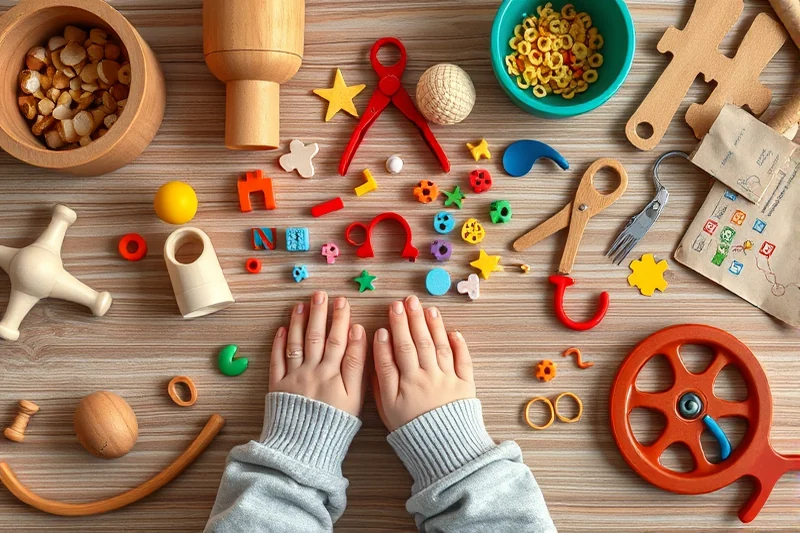
I’ve found that the best way to incorporate sensory play into my daily routine is by being present and intentional with my daughter. Whether it’s during meal prep, cleaning, or just sitting together, I’ve made it a point to involve her in these moments. It doesn’t take much—just a few minutes here and there—and it makes a big difference.
One of the easiest ways to do this is by letting her help with simple tasks. For example, when I’m kneading dough, I let her press her hands into it. When I’m cleaning, I let her use a sponge or cloth. These are all opportunities for sensory exploration that don’t require any extra effort or preparation.
I’ve also found that being patient and allowing her to explore at her own pace is essential. Sometimes she’ll want to do something messy or unconventional, but I’ve learned to trust her instincts. It’s not about perfection—it’s about connection, growth, and exploration.
The Long-Term Impact of Sensory Play on Child Development
Looking back, I can see how the simple moments of sensory play have shaped my daughter’s development in ways I never anticipated. She’s more confident, more curious, and more capable than she was a year ago. These moments have helped her build foundational skills that will support her learning, creativity, and emotional well-being throughout her life.
One of the most noticeable changes I’ve seen is in her problem-solving abilities. When she’s faced with a challenge, she’s more likely to explore different solutions and think creatively. I believe this is a direct result of the sensory experiences she’s had over time. These moments have taught her to experiment, to adapt, and to trust her instincts.
I’ve also noticed that she’s more emotionally resilient. When she’s frustrated or overwhelmed, she can often find comfort in sensory activities. Whether it’s pressing her hands into a bowl of flour or feeling the texture of dough, these moments help her regulate her emotions and stay calm. It’s not just about play—it’s about growth, connection, and exploration.
⭐ Classic
The original recipe with rolled oats, milk, and cinnamon for a simple, comforting sensory experience.
💰 Budget
A no-frills version that uses basic pantry staples and costs less than $2.50 per serving.
⚡ Extra-Fast
A quicker version that skips soaking and uses a microwave or instant oats for a faster sensory play activity.
✨ Depth
Adds more layers of texture and flavor with additions like banana slices, nuts, or honey for a richer sensory experience.
🥗 Light
A low-calorie version that uses unsweetened milk and minimal added sugars for a lighter, more health-focused sensory play.
| The mistake | Why it happens | The fix |
|---|---|---|
| Assuming that sensory play needs to be structured or planned. | Sensory play doesn’t need to be structured or planned—it can happen in the most ordinary moments of daily life. Trying to make it too rigid or formal can limit its impact and make it feel less natural. | Embrace the spontaneity of sensory play. Let it happen naturally, and don’t feel the need to plan or control every aspect of it. |
| Not being present during sensory play. | Being present during sensory play is essential. If you’re distracted or not fully engaged, your child may not feel the same connection or benefit from the experience. | Make sure to be fully present during sensory play. Put away distractions like your phone or TV, and focus on being with your child and supporting their exploration. |
| Trying to control or direct your child’s sensory play. | Trying to control or direct your child’s sensory play can limit their creativity and independence. It can also make the experience feel less natural and less enjoyable for them. | Let your child lead the way. Give them space to explore, experiment, and make their own discoveries. Trust their instincts and support them in their own way. |
| Assuming that sensory play needs to be messy or loud. | Sensory play doesn’t need to be messy or loud. It can be a quiet, calm experience that still engages the senses and promotes learning and growth. | Find a balance that works for your child and your home. Some sensory activities can be messy and loud, while others can be calm and quiet. Choose what feels right for your family. |
What You'll Need tap to check off
- 1 lb rolled oats
- ½ cup milk
- cinnamon to taste
Method tap a step when done
- In a large bowl, add the rolled oats and cinnamon. Mix well to coat the oats evenly.
- Pour the milk over the oats and stir until the mixture is well combined.
- Cover the bowl with a lid or plastic wrap and let it sit for 8 minutes to allow the oats to soak and soften.
- Heat a large pan over medium heat and add the oat mixture.
- Stir the mixture continuously for about 12 minutes, until it reaches a thick, creamy consistency.
- Once the oatmeal is cooked, let it cool slightly before serving. It’s now ready for sensory exploration with your child.
Key Facts
Sensory Play And Child Development Without Tools
Common Questions
What are the best times to incorporate sensory play into my child's day?
How can I make sensory play more engaging for my child?
What are some simple activities I can do with my child at home?
How does sensory play support my child's development?
References
- The Benefits of Sensory Play - Community Education (blogs.cornell.edu)
- Brain-Building Through Play: Activities for Infants, Toddlers, and Children (developingchild.harvard.edu)
- Encouraging Independent Play - Education and Human Development (education.tamu.edu)
- PDF Meeting the Sensory Needs of Young Children (openlab.bmcc.cuny.edu)
- Ch. 5 Sensory Play - Play and Learning in Early Childhood Education (pressbooks.usnh.edu)
Cite this guide
PlayMessy (2026). Sensory Play And Child Development Without Tools. https://playmessy.com/sensory-play-and-child-development-without-tools/
Feel free to cite or share this guide.